
You have probably heard someone say they "made a fortune on options" or "lost their shirt on options." Both stories are true, and the difference between them usually comes down to one decision most beginners never even realize they are making: were they buying the option, or selling it?
That single choice — buyer or seller — decides how much you can lose, how much you can make, and whether a bad day is a bruise or a catastrophe. Get this one idea right and you have already avoided the mistake that wipes out most new traders in their first year.
This guide assumes you have never placed a trade in your life. We will define every term the moment it shows up, walk through slow worked examples with real-ish numbers, and by the end you will know exactly which side of an options trade a beginner should stand on, and why.
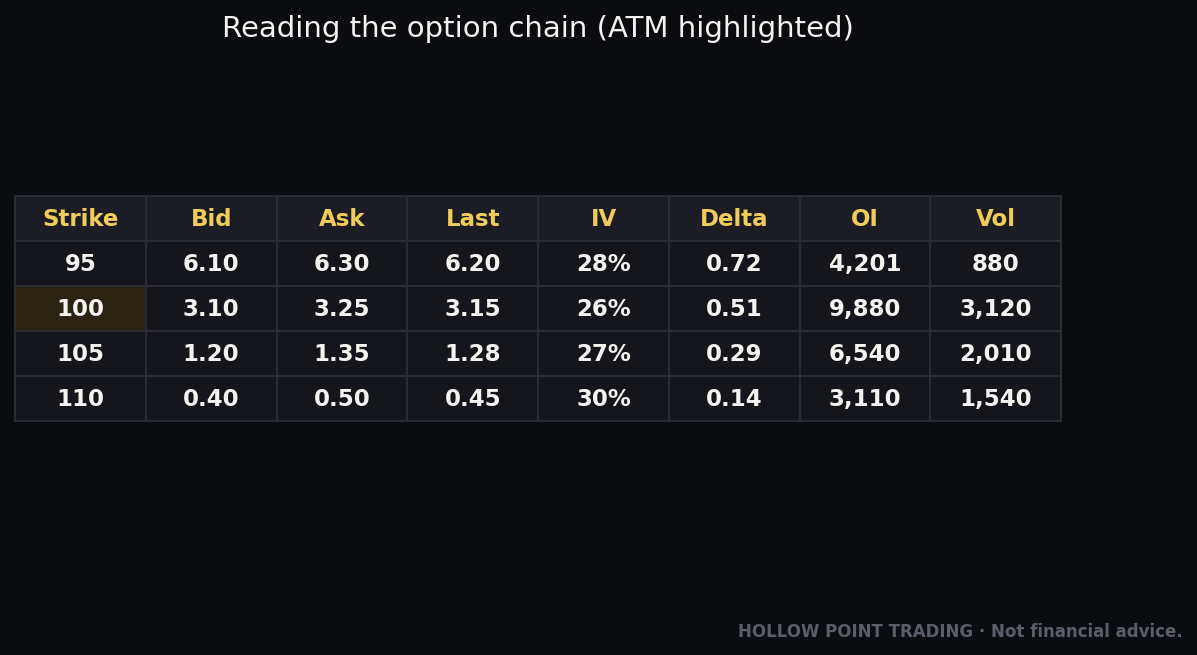
First, What Even Is an Option? (Plain English)
Before we can talk about buying versus selling one, you need to know what the thing is.
An option is a contract — an agreement between two people. It gives one person the right to buy or sell a stock at a specific price, on or before a specific date. Notice the word right, not obligation. That word is the whole game.
Think of it like a coupon. Imagine a pizza shop hands you a coupon that says: "This coupon lets you buy a large pizza for $10, any time in the next 30 days." Pizza normally costs $15. That coupon has value — it lets you lock in a good price. If pizza prices shoot up to $25 next week, your coupon becomes very valuable, because you can still buy at $10. If pizza goes on sale for $8, your coupon is worthless — you would just buy the cheap pizza and throw the coupon away.
That coupon is basically a call option. It gives you the right to buy something at a set price. There is also a coupon that works in reverse — the right to sell something at a set price — and that is a put option. We will come back to those.
Here are the four words you will see over and over. Learn them now:
- Strike price — the fixed price written on the coupon. The price you get to buy (or sell) at. In our pizza example, $10.
- Expiration — the date the coupon stops working. After this date, it is dead.
- Premium — the price you pay to own the option contract itself. The pizza shop might sell that coupon for $2. That $2 is the premium.
- Underlying — the actual thing the option is about. The pizza. In real trading, the stock (like Apple or Tesla).
One more critical fact: in the U.S. stock market, one option contract usually controls 100 shares of the underlying stock. This is the number one thing beginners forget, and it matters enormously. If an option is priced at $2, you are not paying $2 — you are paying $2 × 100 shares = $200. Always multiply by 100. Write that on a sticky note.
The Two Sides of Every Contract: Buyer and Seller
Here is the idea this entire guide is built around.
Every single options contract has two people in it. One person is on each side:
- The buyer — pays the premium, receives the right.
- The seller — collects the premium, takes on the obligation.
This is not optional trivia. It is the core of everything. When you place an options trade, you are choosing one of these seats. And the two seats have wildly different risk.
Let's define two pairs of words that describe these seats, because you will see them everywhere:
- Long — this just means you bought something and now own it. If you "go long a call," you bought a call option. Long = buyer. You paid money out.
- Short — this means you sold something you did not first own, taking on an obligation. If you "go short a call," you sold a call option to someone else. Short = seller. You took money in.
A quick way to keep it straight: the buyer pays and hopes. The seller gets paid and owes.
The buyer hands over the premium up front, then hopes the trade moves their way. The seller pockets the premium immediately, but now has a promise hanging over their head that could cost them later.
Neither seat is "good" or "bad" on its own. But — and this is the whole reason this article exists — they carry completely different amounts of risk. And for a beginner, the difference between them is the difference between a safe first step and a landmine.
Defined Risk vs Undefined Risk: The Most Important Concept in This Guide
If you remember only one thing from this entire piece, remember this section.
Defined risk means you know, before you ever place the trade, the absolute maximum you can lose. It is a fixed number. It cannot get worse. You could walk away from your screen for a week, the market could do something insane, and your loss still cannot exceed that number.
Undefined risk (also called unlimited risk) means your maximum loss is not capped. It could be far, far larger than you expect — in some cases, more money than you even have in your account.
Let me make this concrete, because it sounds abstract until you see the numbers.
The buyer's risk is defined
When you buy an option, the most you can ever lose is the premium you paid. That's it. Full stop.
Go back to the pizza coupon. You paid $2 for it. What is the worst thing that can happen? The coupon expires worthless and you are out your $2. You cannot lose $3. You cannot lose $50. The coupon simply becomes garbage and your loss is exactly the $2 you spent. Your risk was defined the moment you bought it.
This is a beautiful property. As a buyer, you always know your worst-case scenario, and it is always just the premium.
The seller's risk can be undefined
Now flip to the other side. Imagine you are the pizza shop that sold the coupon. You collected $2. Nice — free money, right? But you now have an obligation: if that customer shows up with the coupon, you must sell them a large pizza for $10, no matter what pizza costs you that day.
What if a tomato shortage hits and pizzas now cost you $40 each to make? You still have to hand it over for $10. You lose $30 on that pizza — and you only collected $2 for the coupon. Your $2 of "free money" just turned into a $28 net loss. And if prices go even higher, your loss gets even bigger.
That is undefined risk. As a seller, you collected a small, known amount up front, but your potential loss is large and, in some cases, theoretically unlimited.
Here is the honest, uncomfortable summary that most flashy options content skips:
The buyer's maximum loss is small and known. The seller's maximum loss can be large and, in the worst structures, unlimited.
This is the single most important reason a beginner should start on the buying side, or a very specific defined-risk selling side that we will cover. Let's dig into exactly why.
Why Beginners Should Start by BUYING
Now we can answer the headline question directly. There are four solid reasons a brand-new trader should begin by buying options rather than selling them.
1. Your risk is defined and small. As we just covered, when you buy, the absolute most you can lose is the premium. If you buy a call for $150 (remember: $1.50 × 100 shares), then $150 is your entire risk. You literally cannot lose more, even if you fall asleep. For someone still learning, knowing your worst case before you enter is priceless. It lets you protect your capital, which is HPT rule number one.
2. It is simple to understand. Buying an option is a clean bet: "I think this stock will move in this direction by this date." Either it does, and your option gains value, or it doesn't, and it fades. There is no scenario where a surprise obligation appears and demands more money from you.
3. It matches how beginners think. New traders naturally think in terms of "I think this stock is going up." Buying a call expresses exactly that. Buying a put expresses "I think this stock is going down." The tool matches the thought.
4. You cannot get a margin call from a long option. A margin call is a scary phone call (or app notification) from your broker demanding you deposit more money right now because a trade has gone against you badly. This can happen to options sellers with undefined risk. It essentially cannot happen when all you did was buy an option — your money was already spent, so there is nothing more they can demand. This alone removes an entire category of beginner nightmare.
Now, buying is not magic. It has one real drawback we will be honest about: options lose value as time passes, even if the stock does nothing. This is called time decay (the fancy term is theta). Your pizza coupon is worth less with 3 days left than with 30 days left, because there is less time for something good to happen. So as a buyer, you need the stock to move enough and soon enough to overcome that decay. More on this in the mistakes section. But even with that drawback, your loss is still capped — and that is what keeps a beginner alive long enough to learn.
A Fully Worked Beginner Example: Buying a Call
Let's slow all the way down and walk through one complete trade, dollar by dollar, so you can actually picture it.
The setup. It is a Monday. A stock — let's call it XYZ — is trading at $100 per share. You have done your homework and you believe XYZ is going to rise over the next month, maybe on the back of a strong sector (that macro → sector → stock flow HPT always preaches). You don't want to buy 100 actual shares, because that would cost $10,000 and you don't want to risk that much.
Instead, you buy one call option. Here are its details:
- Underlying: XYZ
- Strike price: $105 (your right to buy XYZ at $105)
- Expiration: 30 days from now
- Premium: $2.00 per share
What you actually pay. The premium is $2.00, but remember one contract = 100 shares. So your cost is $2.00 × 100 = $200. That $200 leaves your account today. That is your entire risk. Circle it: max loss = $200.
Now let's fast-forward 30 days and look at what can happen.
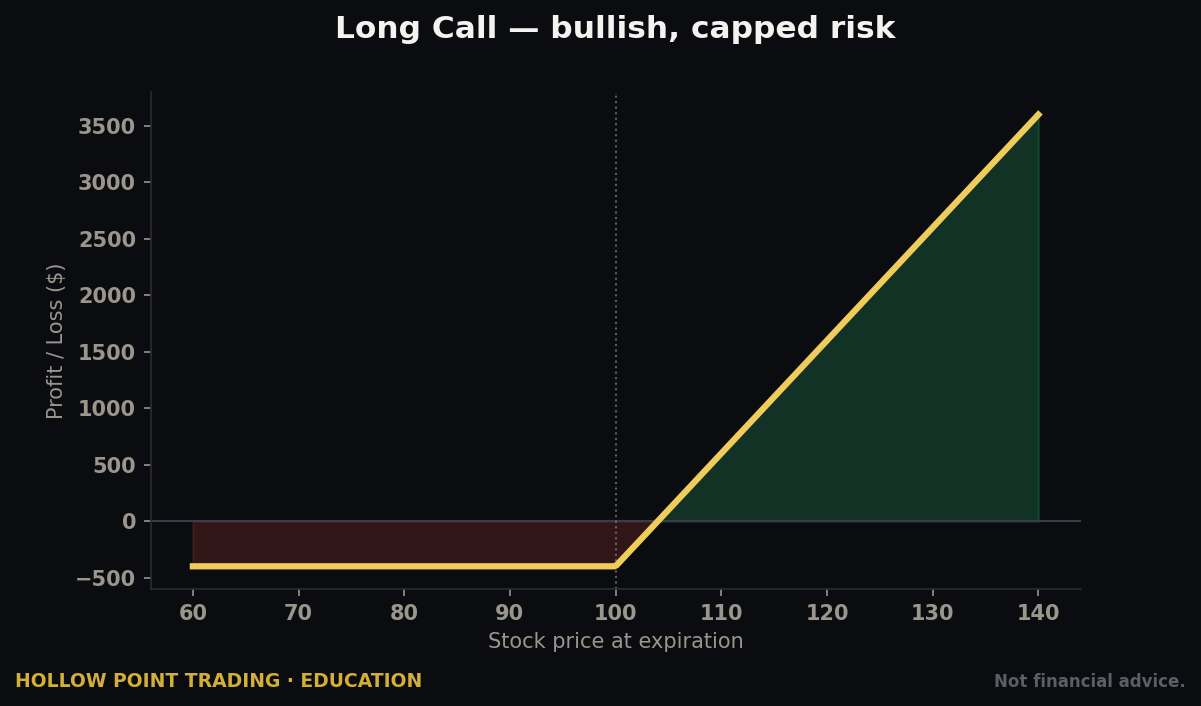
Scenario A — XYZ rises to $115. Your call gives you the right to buy at $105, but the stock is now worth $115. That right is worth at least $10 per share (the $115 value minus your $105 strike). $10 × 100 shares = $1,000. You paid $200 to get it. Your profit is $1,000 − $200 = $800. On a $200 risk, that is a 4-to-1 return. This is why people love buying options: a small, capped bet can pay off several times over.
Scenario B — XYZ drifts to exactly $105. Your right to buy at $105 when the stock is at $105 is worth… nothing extra. Why pay for a coupon to buy at the same price the stock already is? The option expires worthless. You lose your $200. Not fun — but it is only the $200 you already knew you were risking.
Scenario C — XYZ falls to $90. The stock dropped. Your right to buy at $105 is completely useless — nobody wants to buy at $105 when shares are $90. The option expires worthless. Your loss is, again, exactly $200. Notice something huge: the stock fell $10 per share, which would have been a $1,000 loss if you had owned 100 real shares — but as an option buyer, your loss was capped at $200. The defined risk protected you.
The breakeven. For the trade to truly break even, XYZ needs to reach your strike plus the premium: $105 + $2 = $107. Below $107 at expiration, you lose some or all of your premium. Above $107, you are in real profit. Knowing your breakeven before you enter is a mark of a disciplined trader.
That is the entire life cycle of a bought call. Clean, capped, and understandable. This is the seat a beginner should learn in.
What "Writing" an Option Means (Selling, Explained)
You will hear traders say they "wrote" an option. This word confuses every beginner, so let's kill the confusion.
Writing an option means selling one. That's all it means. "Writing a call" = "selling a call." The term comes from the old days when the seller literally wrote the contract into existence. When you write (sell) an option, you are the one creating the obligation and collecting the premium for taking it on.
When you write an option, two things happen:
- You receive the premium immediately. Cash lands in your account today. This feels great and is exactly why selling is tempting.
- You take on an obligation. You are now on the hook to deliver if the buyer decides to use their right.
There are two flavors, and their risk profiles are very different:
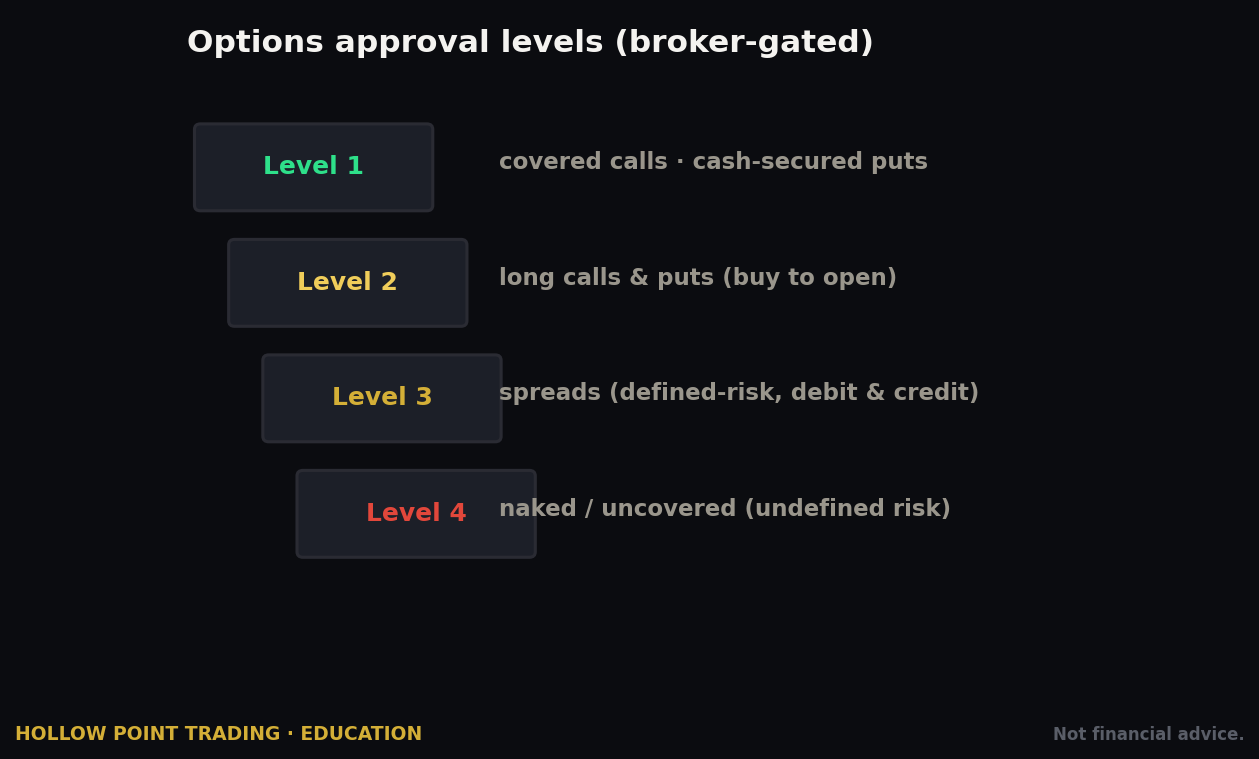
Writing a call (selling a call). You collect premium, and in exchange you are obligated to sell the stock at the strike price if asked. If you do NOT already own the stock, this is called a naked call — and it carries unlimited risk, because a stock can theoretically rise forever, and your obligation to sell it cheaply gets worse with every dollar it climbs. This is one of the most dangerous positions in all of trading. A beginner should never sell a naked call. Ever.
Writing a put (selling a put). You collect premium, and in exchange you are obligated to buy the stock at the strike price if asked. Your risk here is large but not infinite — a stock can only fall to zero. Still, "only to zero" can be a devastating loss. If you sell a put on a $100 stock and it goes to $0, you can be forced to buy 100 shares at $100 (a $10,000 obligation) that are now worth nothing.
So why does anyone sell options at all? Because sellers win most of the time on small moves — they profit from time decay, that same theta that hurts buyers. The seller is essentially the "insurance company," collecting steady small premiums, betting the big event won't happen. Professionals do this deliberately and manage the risk carefully. But the moment a big move DOES happen, an undefined-risk seller can lose far more than every premium they ever collected. That trade-off — many small wins, rare huge losses — is exactly the wrong shape for a beginner still learning to manage risk.
The Middle Path: Defined-Risk Selling
Here is the nuance that makes this guide honest, because "just buy, never sell" is too simplistic.
There is a way to sell options where your risk is defined — capped, known, safe from the unlimited-loss trap. It is done by pairing your sold option with a bought option that acts as a safety net. These paired trades are called spreads, and the defined-risk versions are what a beginner should graduate to before ever touching naked selling.
The idea in plain English: you sell an option to collect premium, but at the same time you buy a cheaper, further-away option that caps how bad things can get. The bought option is like a fire extinguisher bolted to the wall — you hope you never need it, but it turns a potential catastrophe into a known, limited loss.
A common beginner-friendly example is the cash-secured put. This is where you sell a put, but you set aside enough cash to actually buy the shares if you get assigned. You are not using borrowed money, and you genuinely want to own the stock at that lower price. Your risk is still "the stock goes to zero," but it is fully cash-backed and there is no margin call surprise — you decided in advance you'd be happy owning those shares. Many disciplined investors use this to get paid while waiting to buy stocks they like at a discount.
The key distinction for your first year:
- Undefined-risk selling (naked calls, naked puts on margin): avoid completely as a beginner.
- Defined-risk selling (spreads, cash-secured puts): a reasonable next step once you fully understand buying — because your worst case is still a known number.
You do not need to master spreads on day one. Just know the map: start by buying, graduate to defined-risk selling, and treat undefined-risk selling as an advanced tool you earn the right to use, if ever.
The Beginner Mistakes to Avoid
These are the exact potholes that swallow new options traders. Read them twice.
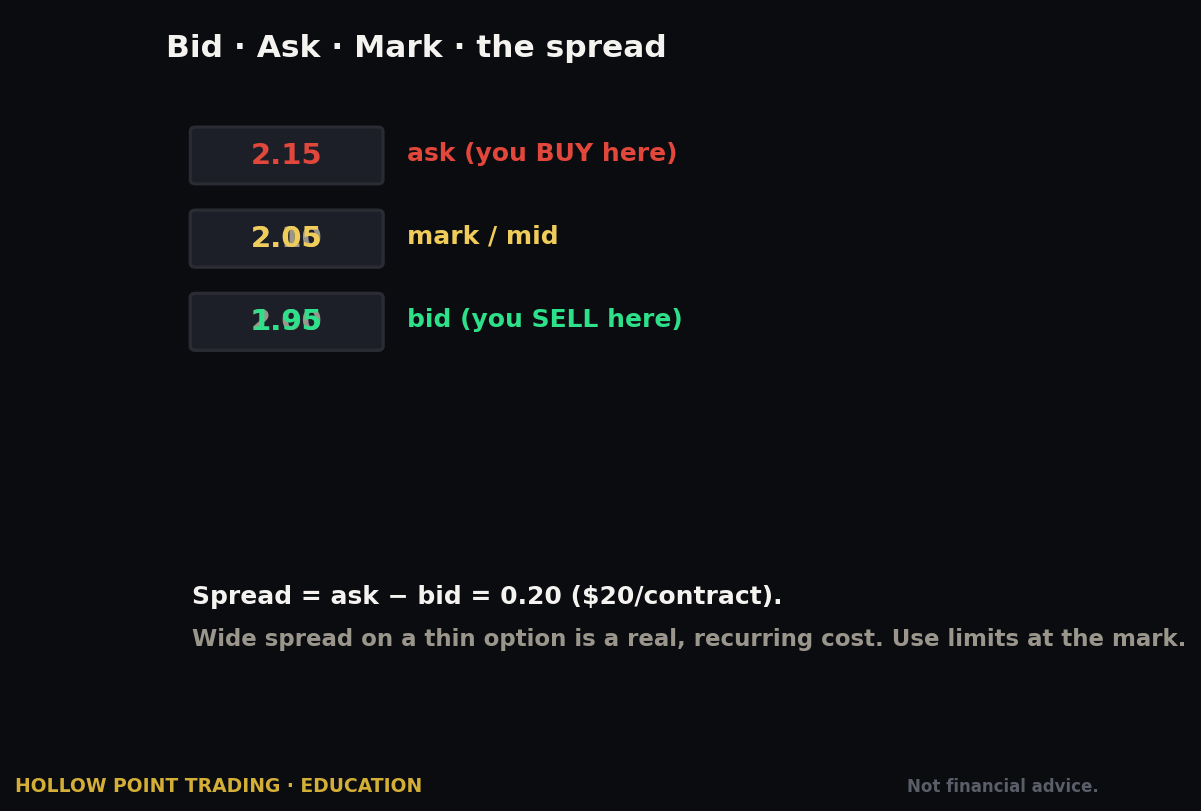
Mistake 1 — Forgetting the ×100 multiplier. An option "priced at $3" costs you $300, not $3. People buy ten contracts thinking they're spending $30 and discover they just committed $3,000. Always multiply premium by 100, then by the number of contracts.
Mistake 2 — Selling naked options because "the premium is free money." It is not free. You are being paid to accept a risk, and with naked calls that risk is unlimited. The premium you collect is tiny compared to what a big move can cost you. New traders sell a naked call, collect $80, feel clever, and then a stock gaps up on earnings and they lose $4,000. Do not be that trader.
Mistake 3 — Ignoring time decay when buying. As a buyer, time is against you. Every day that passes, your option bleeds a little value even if the stock doesn't move. Beginners buy an option, the stock goes sideways for two weeks, and they're baffled that they're down 40%. The fix: give yourself enough time (don't buy options expiring in two days as a beginner) and expect the stock to actually move.
Mistake 4 — Buying options that are too far out of the money because they're "cheap." A call with a strike far above the current price is cheap for a reason — it's a long shot. Beginners love these lottery tickets because you can buy a lot of them. Most expire worthless. Cheap does not mean good value.
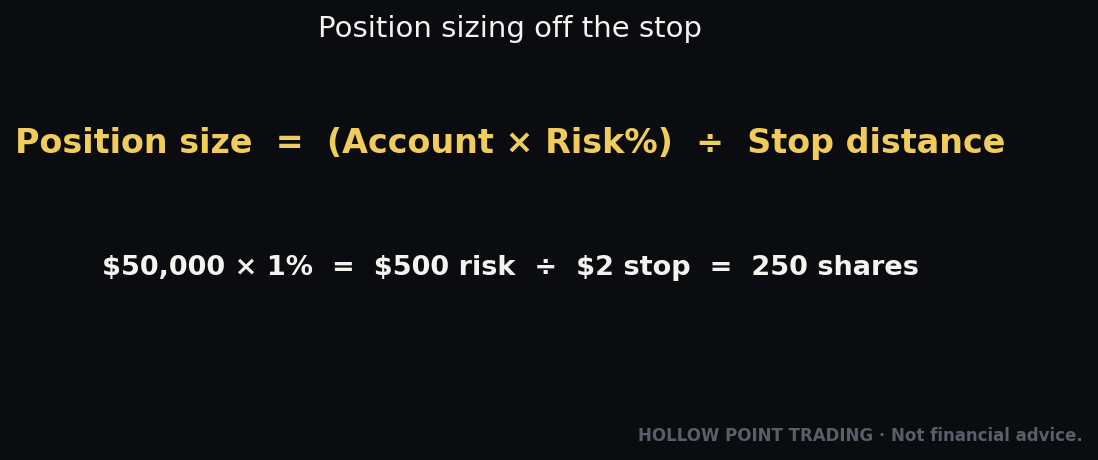
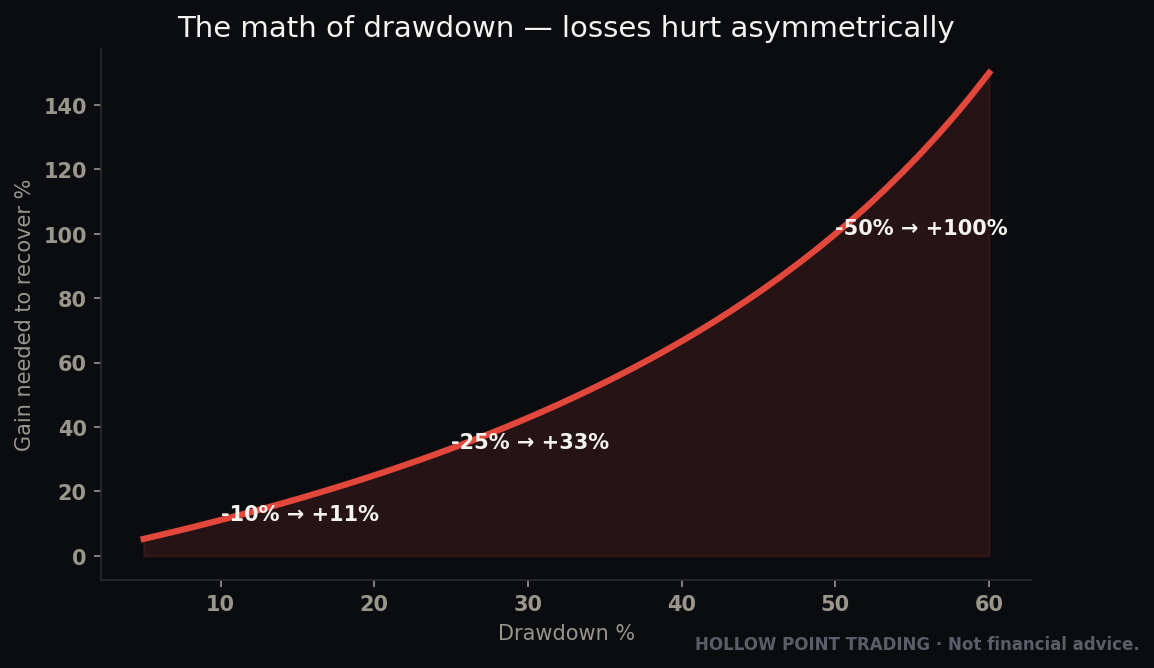
Mistake 5 — Risking too much on one trade. Even with defined risk, if you put 50% of your account into one option and it expires worthless, you just lost half your money. Position sizing matters. A common beginner guideline is risking only a small slice — say 1–2% of your account — on any single trade. Protect capital first; the opportunities never stop coming.
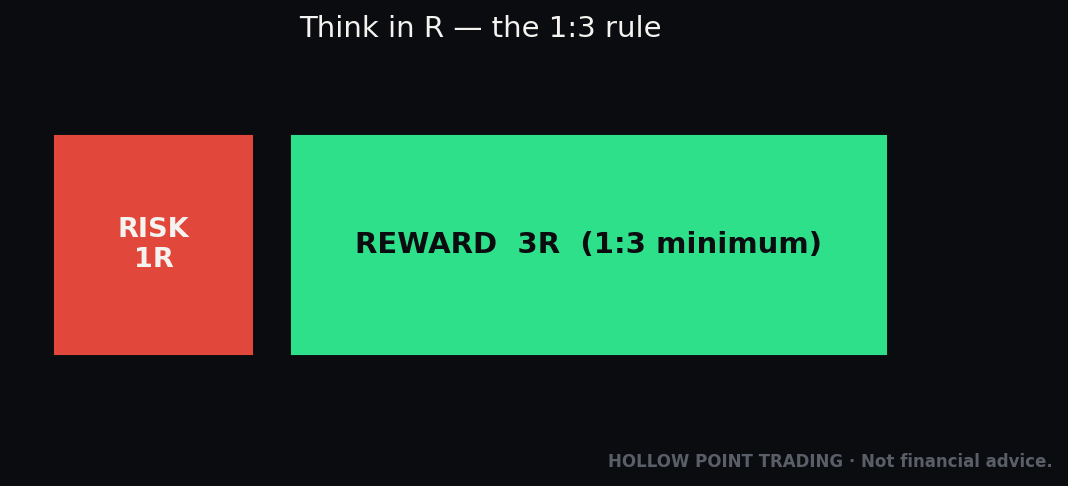
Mistake 6 — Not knowing your exit before you enter. Decide in advance: at what profit will you take money off the table, and at what loss will you get out? This connects directly to HPT's 1:3 reward-to-risk idea — only take trades where a win could reasonably pay about three times what a loss would cost. If you're risking $200, you want a realistic path to roughly $600. Writing that down before you click "buy" is what separates a trader from a gambler.
Mistake 7 — Confusing "long" and "short" with market direction. "Long" just means you bought the option; "short" means you sold it. You can be long a put, which is a bet the stock goes down. Don't assume long = bullish and short = bearish for options. Long = you're the buyer. Short = you're the seller. Direction depends on whether it's a call or a put.
Simple Cheat-Sheet: Which Seat Am I In?
Keep this next to your screen for your first months. When you look at any options trade, answer these in order:
- Am I buying or selling? Buying = long = I pay premium, risk is defined. Selling = short = I collect premium, risk may be undefined.
- Is it a call or a put? Call = the right to buy. Put = the right to sell.
- What is my maximum loss, in actual dollars? If you can't state this number out loud before entering, do not enter. For a bought option, it's the premium × 100 × contracts. For a naked sold option, the answer is "huge / unlimited" — which means don't.
- Is my risk defined? If yes, good. If no (naked call, naked put on margin), a beginner walks away.
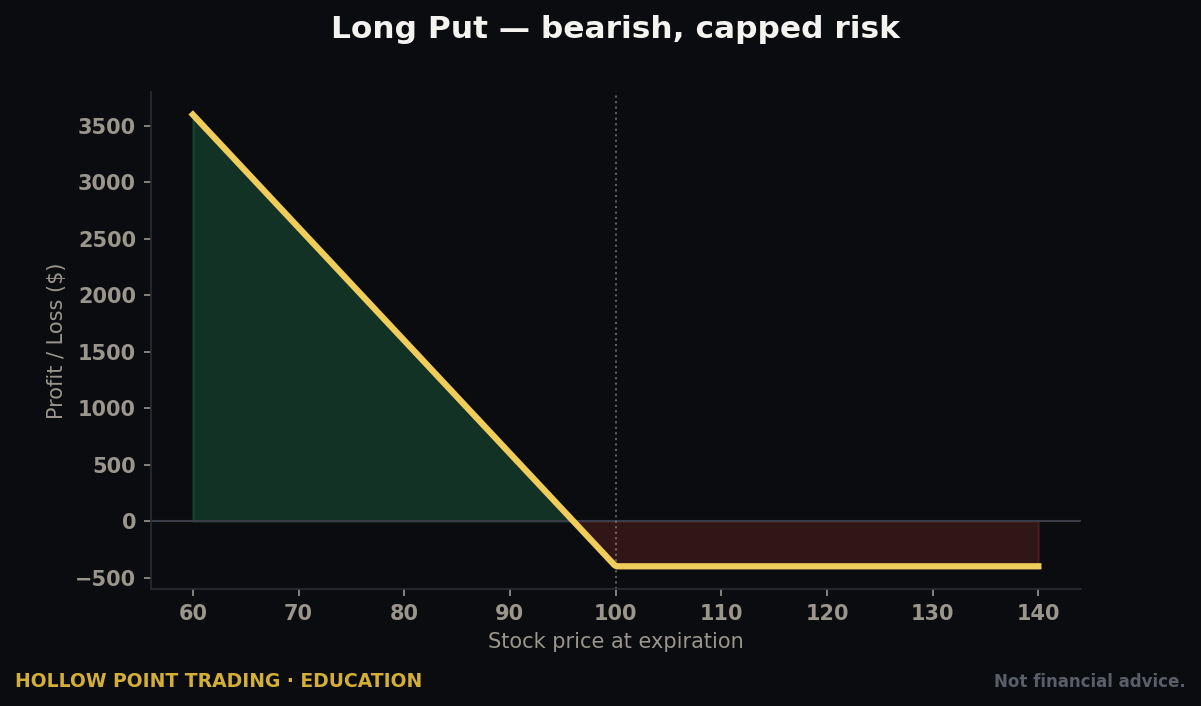
- What's my breakeven? For a bought call: strike + premium. For a bought put: strike − premium.
- Do I have enough time? Am I giving the trade weeks, not hours, to work?
- Is my reward at least ~3× my risk? If not, why am I taking it?
Quick reference table to memorize:
| You BUY (long) | You SELL / WRITE (short) | |
|---|---|---|
| Cash flow | Pay premium out | Collect premium in |
| You have… | A right | An obligation |
| Max loss | The premium (defined, small) | Large to unlimited (unless a spread) |
| Time decay | Hurts you | Helps you |
| Margin call risk | Essentially none | Yes, if undefined risk |
| Beginner verdict | Start here | Only defined-risk versions, later |
How This Fits the Bigger HPT Picture
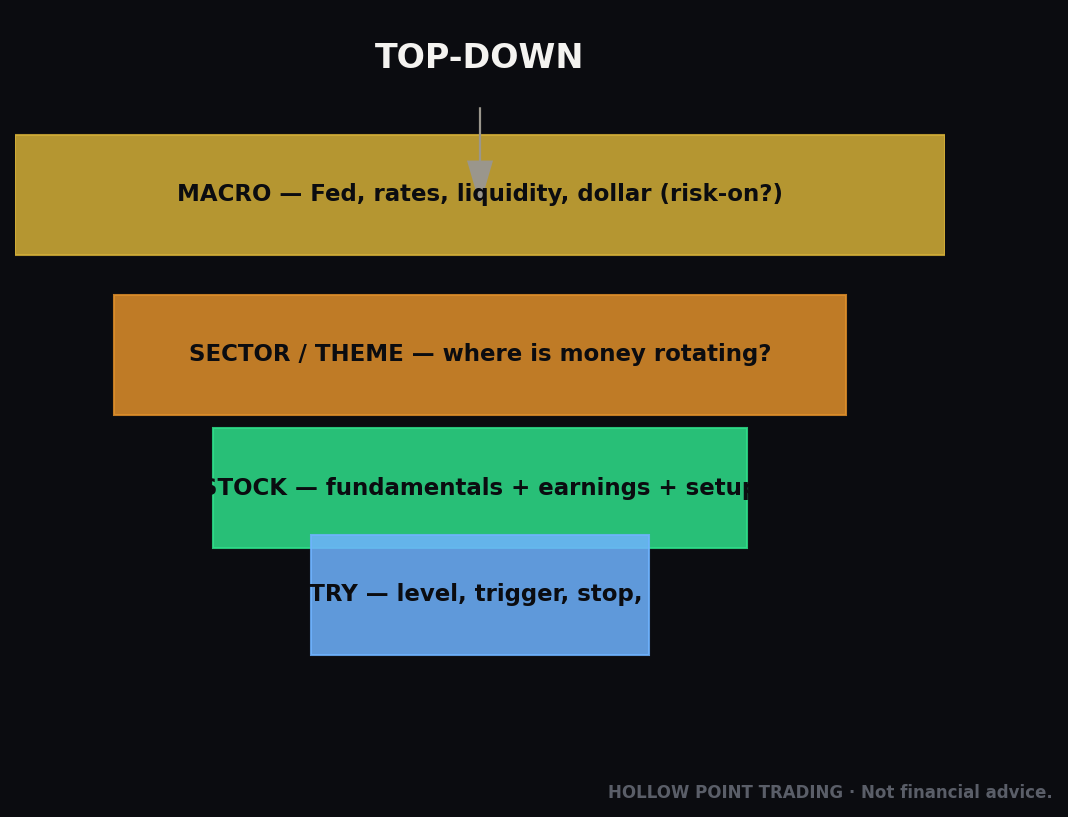
At Hollow Point Trading, everything flows from a simple order of operations: macro → sector → stock. You start by reading the big economic picture, narrow to the sectors that are strong or weak within it, then pick the individual stock. Options are just the tool you use to express that view once you've done the work — and choosing the right tool means choosing the right seat.
Buying a defined-risk option is the perfect beginner tool precisely because it obeys the HPT ethos. Protect capital first: a bought option can't lose more than its premium, so a single wrong read never blows up your account. Discipline over prediction: you don't need to be right about the exact top or bottom — you just need a defined bet with a known risk and a plan. 1:3 reward-to-risk: buying options naturally lends itself to trades where a small capped loss can produce a much larger gain, exactly the asymmetry we hunt for.
The traders who last are not the ones who found the perfect prediction. They're the ones who structured every trade so that being wrong was survivable and being right was worth it. Choosing to buy — to sit in the defined-risk seat — is the very first structural decision that keeps you in the game long enough to get good.
Undefined-risk selling can be part of an advanced trader's toolkit, used deliberately, sized carefully, and hedged. But you earn that seat by first mastering the simple one. Start by buying. Learn how options breathe, how time decay works, how a move in the stock moves your position. Then, when you're ready, step into defined-risk selling — spreads and cash-secured puts — where the safety net is built in.
Master the buyer's seat first. Know your max loss before every trade. Never sell what you can't cover. Do that, and you've already avoided the mistakes that end most beginners' journeys before they start.
The rules aren't there to slow you down. They're the reason you'll still be trading a year from now.
Bound by rules, feared by trade.