
Every trader has heard the line: "I crush it on paper, but the second I go live I fall apart." It gets said with a shrug, as if simulation is just a cruel joke that lies to you. It isn't. Paper trading doesn't lie. It answers exactly the question you ask it — and most people ask it the wrong question.
Ask "can I click buy and watch a number go up?" and you'll get a useless yes. Ask "can I execute a rules-based process, at real size, under real time pressure, and log the result honestly?" and simulation becomes the single most efficient way to build a trader that has ever existed. The difference between those two questions is the entire subject of this guide.
At Hollow Point Trading we treat the simulator like a flight sim treats a pilot: not a toy, not a confidence booster, but a controlled environment where you rack up thousands of reps of the exact motion you'll need when the stakes are real — so that when the stakes do get real, the motion is already automatic and the only new variable is your own nervous system. This piece is the complete manual: why simulation matters, the four platforms worth your time, how to make paper trading realistic enough to transfer, the honest gap between sim and live, how the practice changes across market regimes and timeframes, how it stacks with the rest of your toolkit, what separates the pros from the beginners, the exact numeric checklist for graduating to a small live account, and a full FAQ and cheat-sheet at the end.
The Concept: Practice Is a Skill Transfer Problem, Not a Confidence Problem
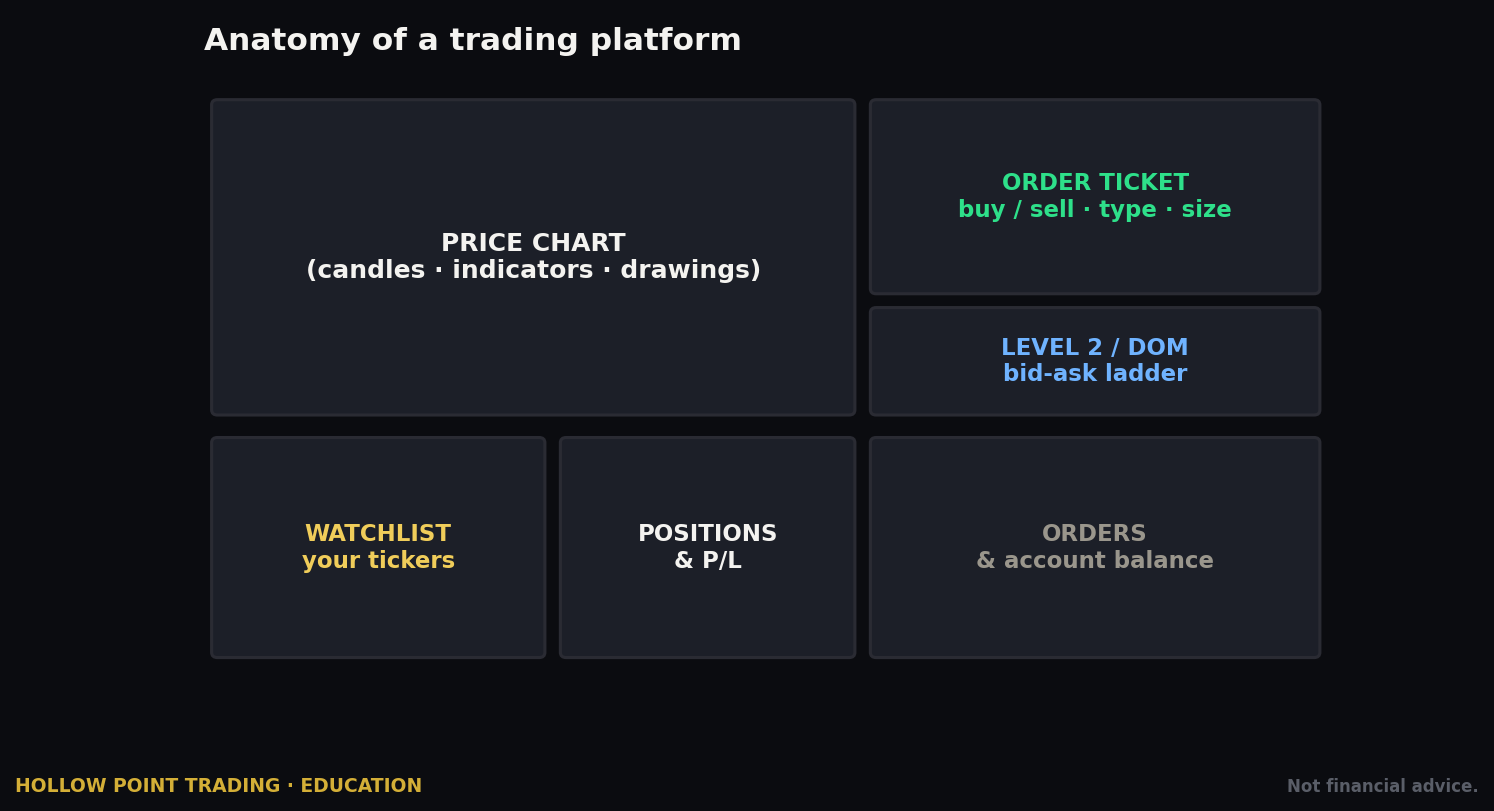
Let's define the thing precisely, because the words carry two hundred years of baggage. Paper trading originally meant literally writing your imaginary trades on paper — no money, no platform, just "I would have bought here." Simulation (or "sim," or "demo," or "paper money") is the modern version: a broker or charting platform gives you a fake account funded with fake dollars, wired into real or near-real market data, and lets you place orders that get filled by a simulated matching engine. You get a live-looking P&L, an order history, and positions — everything a real account has except the consequences.
The purpose is not to prove you can make money. It is skill transfer — the degree to which a skill practiced in one context carries over to another. In sports science this is studied obsessively: a batting cage transfers to a live at-bat only to the extent that the cage reproduces the timing, the decision, and the pressure of the real pitch. Soft-toss builds a swing; it does not build a hitter. The whole game of effective paper trading is engineering your practice so the transfer coefficient is as close to 1.0 as you can make it.
Why execution, not analysis, is the thing you're building
Here's the uncomfortable truth that reframes everything: most of trading is not analysis, it's execution under uncertainty. Reading a chart is maybe 20% of the job. The other 80% is the sequence — spotting the setup, sizing it correctly, placing the entry, defining the stop before you're in, managing the position while the market tries to shake you, and exiting by rule instead of by feeling. That sequence is a motor-and-decision skill, and motor-and-decision skills are built exactly one way: correct reps, high volume, honest feedback. Simulation is the only place on earth you can get thousands of those reps without paying tuition to the market for every mistake.
Think about the raw arithmetic of learning. Suppose a specific setup — say an EMA 12/22/55 reclaim after a failed breakdown — shows up on your instrument roughly twice a month. To see it fifty times live, and take it, and feel the outcome, you would need to trade for two years. And you'd be paying real money for every clumsy early rep while your recognition is still bad. In TradingView Bar Replay you can find and trade that same setup fifty times in a single Saturday afternoon, for free, with no tuition. The rep-count difference between "learn it live" and "learn it in sim" is not 10% — it's two orders of magnitude. That gap is the entire argument.
The "no emotion" objection, answered properly
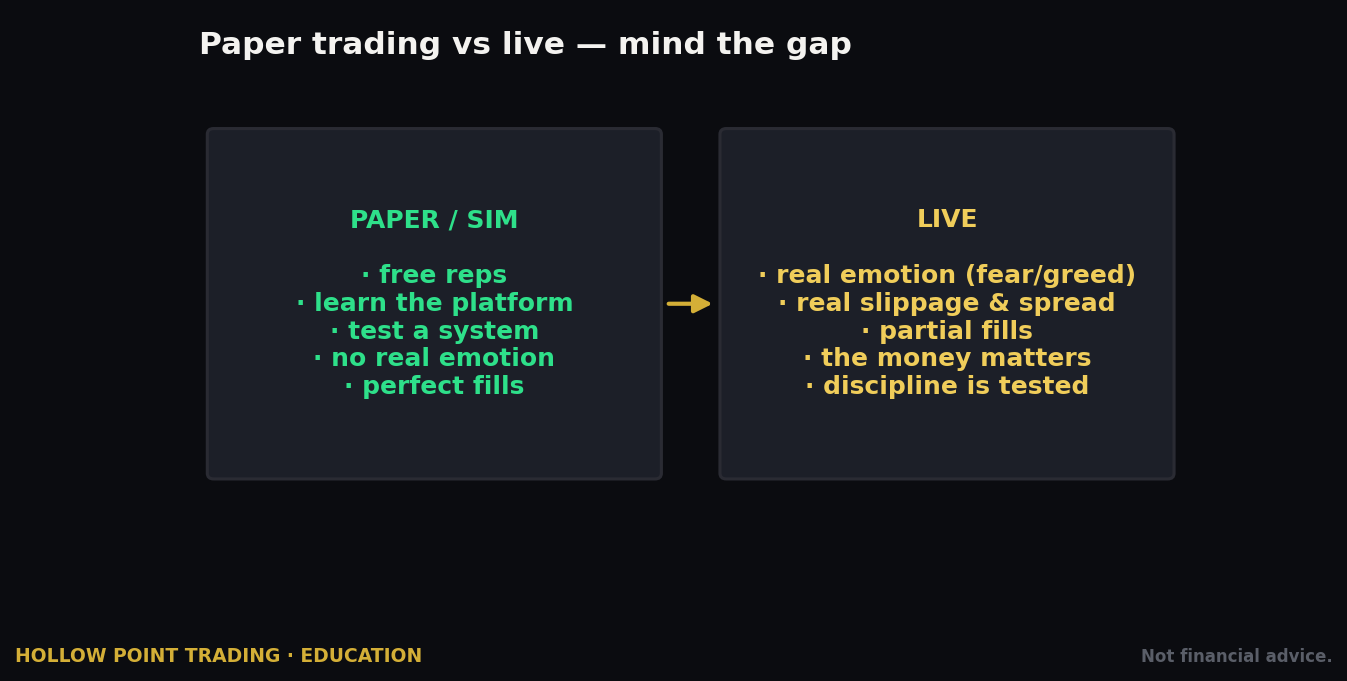
So when someone says "sim doesn't count because there's no emotion," they're half right and completely missing the point. Yes, the emotional load is lower — we'll spend a whole section on that gap and how to close it. But the process — the mechanics you're trying to make automatic — transfers perfectly. You do not want to be discovering how to place a bracket order, calculate position size, or where your stop goes, in the same moment your real money is on the line and your heart rate is 120. You want that part to be muscle memory so that when you go live, you have exactly one hard new thing to master — managing yourself — instead of six.
Simulation lets you isolate the variable. That's the concept. A weightlifter doesn't learn technique with a max-effort bar on his back; he grooves the movement pattern light, thousands of times, so that under real load the only thing he has to fight is the weight, not the pattern. Sim is your light bar. Live is the load.
The Mechanism: How a Simulator Actually Fills Your Orders
To trust a sim — and to know where it will fool you — you have to understand what's happening under the hood when you click buy. There are two fundamentally different kinds of practice environment, and confusing them is where a lot of false confidence is born.
Live-data simulators (broker demo accounts)
thinkorswim paperMoney, Webull paper trading, NinjaTrader's sim engine, Interactive Brokers' paper account. These stream real, current market data — the actual bid/ask moving in real time during market hours — and simulate your fills against it. When you send a market order, the engine fills you at or near the current offer (for a buy) or bid (for a sell). When you send a limit order, it fills you when the market trades through your price. The critical thing to understand: your order is not real, so it never joins the actual order book and never affects the market. In the real world your resting limit order sits in a queue behind everyone who got there first; the sim usually just fills you the instant price touches your limit, ignoring queue position entirely. Hold that thought — it's the single biggest source of the sim-to-live gap, and it comes back in the fills section.
Replay simulators (historical bar-replay)
TradingView's Bar Replay is the marquee example. Here there is no live market at all. You pick a historical date, the chart rewinds to that moment, and you step forward bar by bar (or auto-play at chosen speed) as if it were happening live — but you already have the future sitting to the right of your cursor, so the discipline is to not peek. TradingView lets you place simulated buys and sells during replay and tracks the P&L. The mechanism here is pure historical playback: your fills are modeled against the recorded bars. The magic of replay is compression — you can trade a year of market days in a weekend, seeing the same setup a hundred times instead of waiting a hundred real days for it to show up.
There's a subtle trap unique to replay you should know now: on higher timeframes, a single "bar" hides the path price took inside it. A 1-hour bar that closed green might have traded 40 points lower first and stopped you out before recovering. If you replay only the closes, you'll model fills that never could have happened — you'll "get filled" on the low and "exit" on the high of a bar you'd never have caught cleanly live. The fix is to drop to a lower timeframe for the actual execution decision, or to assume the worse intrabar path when you journal. Replay is honest only if you respect what a completed bar conceals.
The shared skeleton
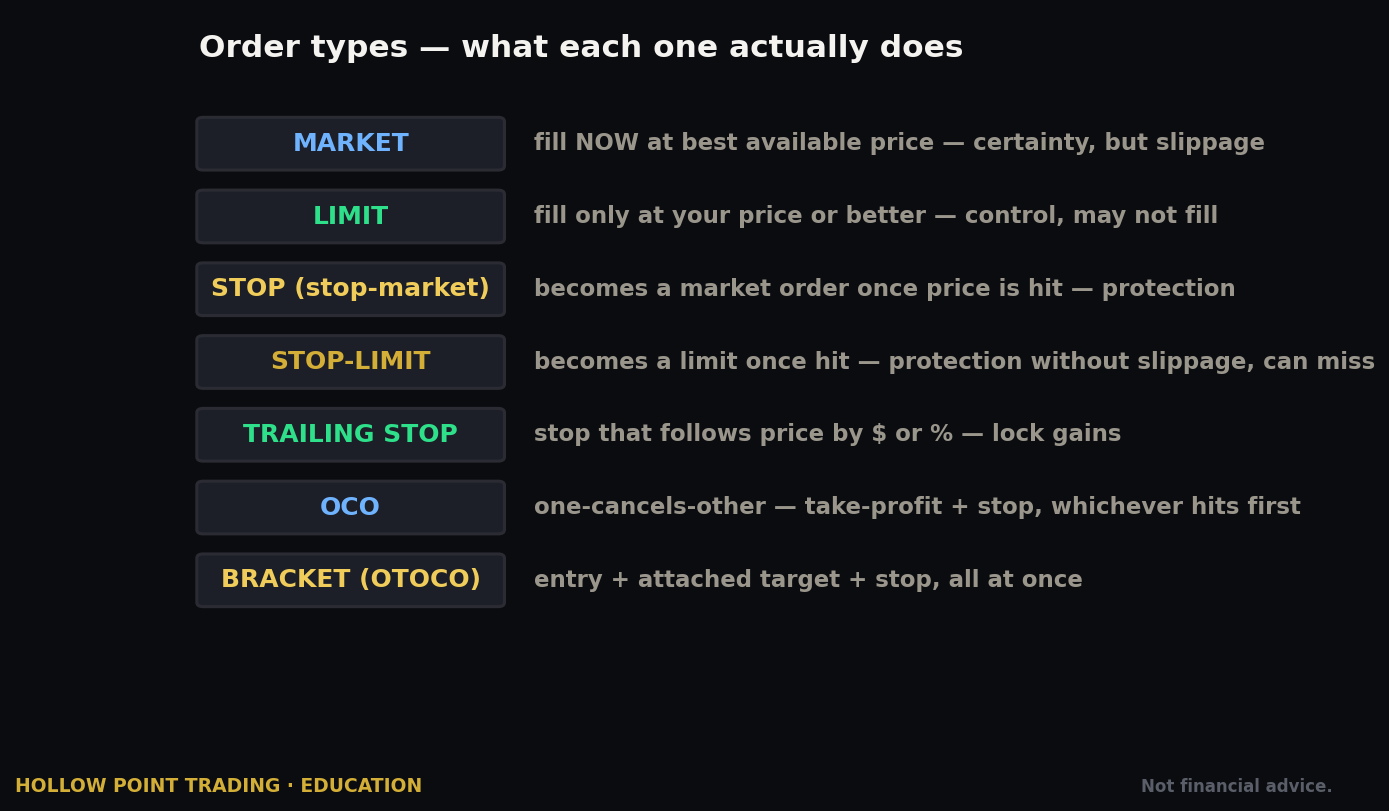
Both mechanisms share the same skeleton. An order type (market, limit, stop, stop-limit, bracket), a matching rule (when does this fill?), and an accounting layer (position, average price, unrealized and realized P&L, commissions if the sim models them). The differences between platforms are almost entirely about (a) how realistic the fill model is, (b) whether it's live or replay, and (c) what instruments and order types are supported. Understand the skeleton and every platform becomes the same tool wearing different clothes.
Spread and slippage — the two costs you must internalize
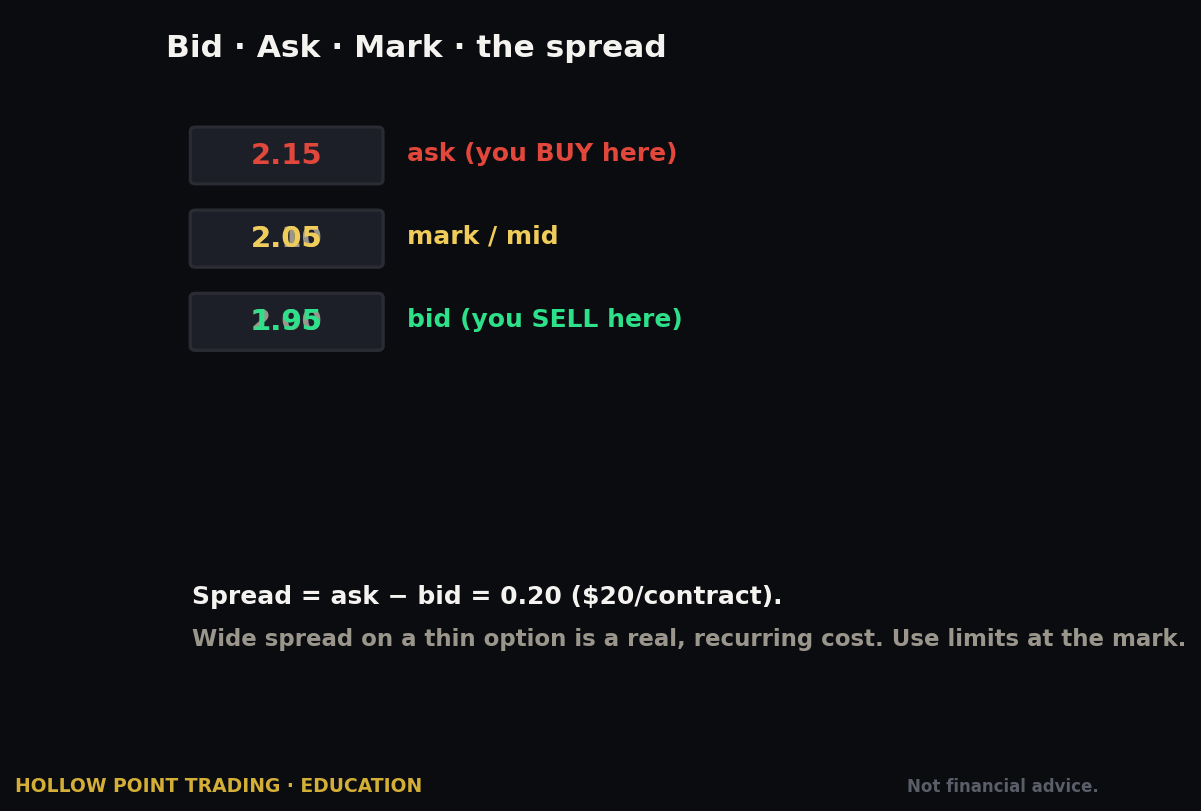
One more mechanical concept you must internalize now: slippage and the spread. The spread is the gap between the bid (highest price a buyer will pay) and the ask (lowest price a seller will accept). You buy at the ask, sell at the bid, so you start every trade already down by the spread — that's your cost of admission. Slippage is the additional difference between the price you expected and the price you actually got, and it shows up worst on market orders in fast-moving or thin markets. A good sim models the spread. Almost no sim models slippage honestly. Remember that.
Put concrete numbers on it. Say you scalp NQ futures and the spread is one tick (0.25 points, $5 on a full contract). You take ten round-trip trades a day. Just the spread costs you $10 per round trip — $100 a day, $2,000 a month — before a single dollar of slippage or commission. A frictionless sim shows you zero of that. If your "profitable" sim strategy nets $1,500 a month in a frictionless engine, it is a losing strategy the moment real spread and slippage arrive. This is not a rounding error. For active traders it is often the entire difference between an edge and a slow bleed.
The Four Platforms: What Each One Is For
You don't need all four. You need the one or two that match your market and your stage. Here's the honest breakdown.
thinkorswim paperMoney (Schwab)
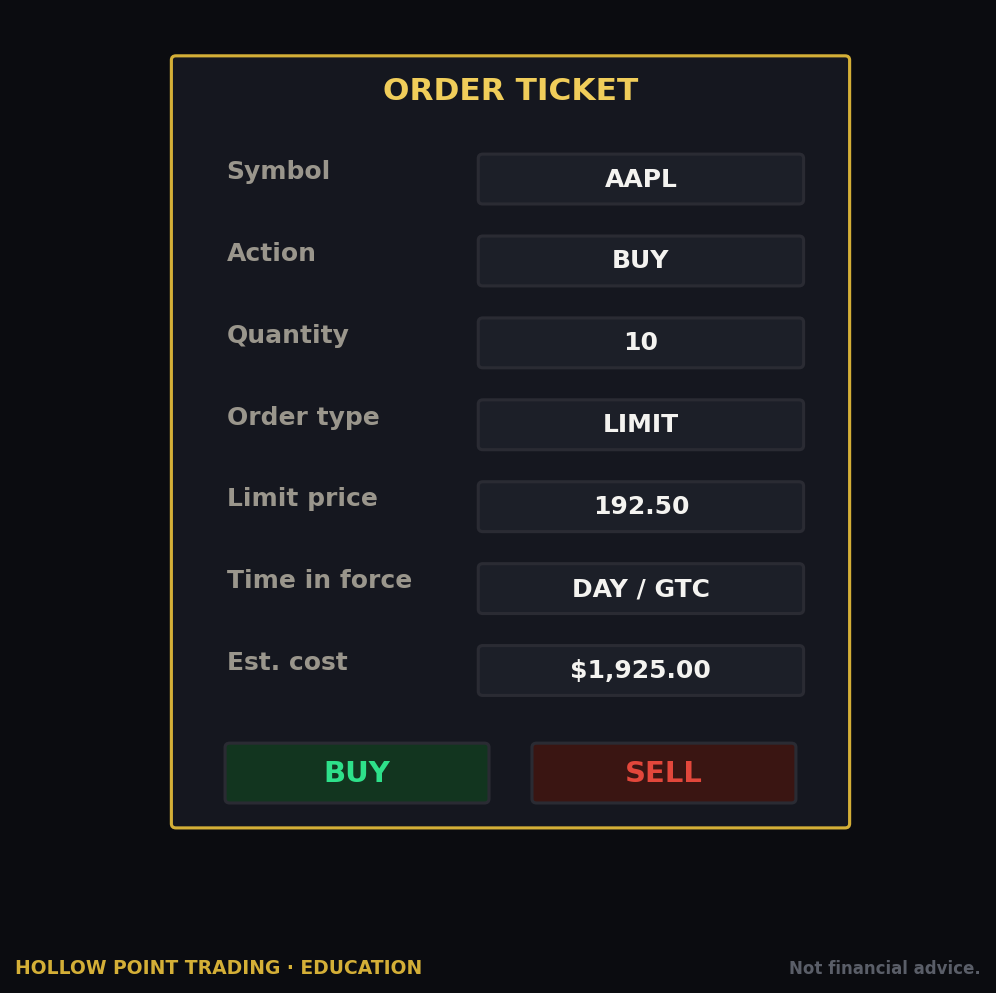
The gold standard for realism among free simulators. paperMoney gives you a full-featured account funded with a configurable balance (the default is famously generous — six figures of fake money, which is itself a trap we'll address). It runs the identical platform to the live version — same charts, same order-entry, same option chains, same bracket and OCO ("one-cancels-other") orders — wired to live or slightly delayed data depending on your setup. If you trade stocks or options and intend to eventually go live somewhere that resembles a real broker, paperMoney reproduces the whole workflow: complex option spreads, rolling positions, the analyze tab, real Greeks. Because the sim platform and the live platform are literally the same software, the muscle memory transfers cleanly. This is the closest a free tool gets to a true flight sim for equities and options.
Weakness: the fills are optimistic (limit orders fill the moment price touches, no queue), and the default balance encourages absurd size. Both are fixable with discipline — set your paperMoney balance to match the real account you'll actually open. A second, smaller weakness: paperMoney's options fills are especially rosy on wide-spread contracts. If you're practicing a strategy that trades a $2.00-wide options spread, the sim will happily fill you at the mid; live you'll fight for a fill a nickel or a dime worse on each leg. Journal those legs as filled at the worse side of the spread, not the mid, or you'll build an options edge that only exists in the demo.
Webull paper trading
Lighter, simpler, mobile-first. Webull's paper account is the friendliest on-ramp for a genuine beginner — clean interface, stocks and some options, easy order entry, a running P&L. If you're brand new and thinkorswim's density is intimidating, Webull lowers the activation energy to zero. The tradeoff is that it models less: fewer order types, a more forgiving fill engine, less of the complex-order and analytics machinery you'll eventually need. Treat Webull as the tricycle — fantastic for learning to click buy/sell with real rules attached, not where you build the full professional workflow. A specific caution: because Webull is so frictionless, it's the easiest platform on which to fool yourself. Everything that follows in the Realism Protocol matters more on Webull, not less.
TradingView Bar Replay
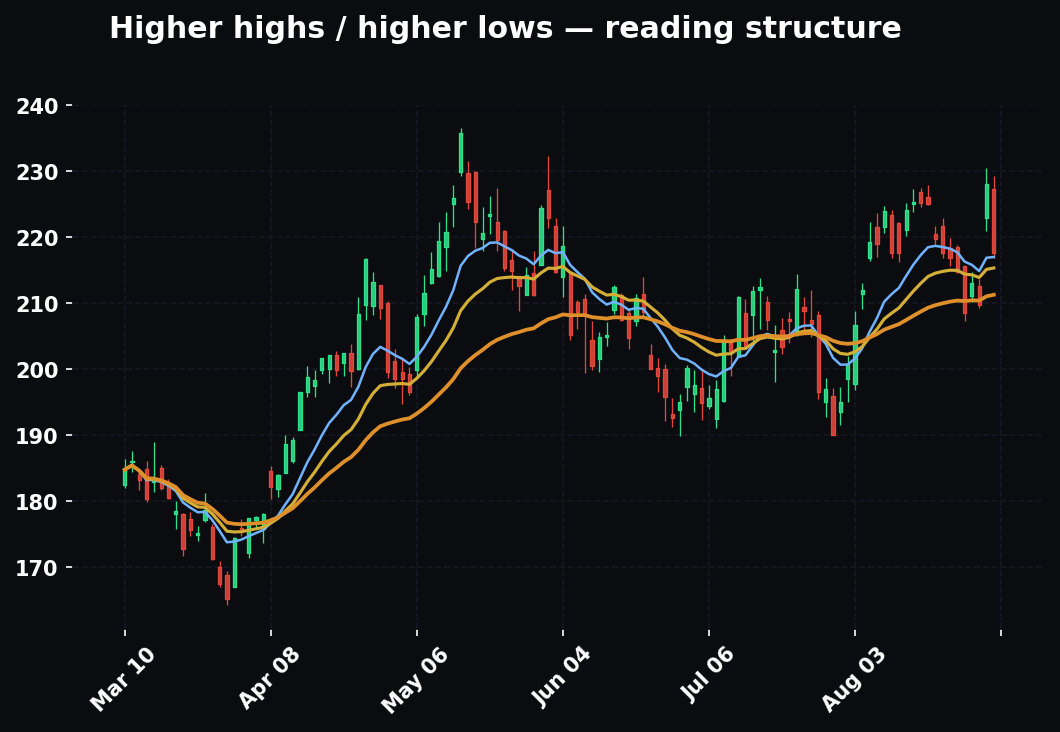
The rep-multiplier. This isn't a broker sim — it's a charting sim — and its superpower is time compression and repetition. Bar Replay lets you rewind any instrument to any historical moment and walk it forward bar by bar. For pattern recognition and setup mastery it is unmatched: you can hunt for one specific setup — say, an EMA 12/22/55 reclaim after a failed breakdown — across two years of history in an afternoon, seeing it fifty times instead of twice. The trading layer (place simulated longs and shorts, track P&L) turns pattern-spotting into decision practice. The discipline it demands is brutal and essential: you cannot let your eye drift to the right of the replay bar. The future is sitting right there. If you peek, you've learned nothing. Replay is where HPT traders build the eye — the instant recognition of structure, EMA stacks, and confluence — before they ever risk a fill.
NinjaTrader sim
The futures specialist. If you're trading futures — ES, NQ, the whole CME complex — NinjaTrader's simulation is the serious environment. It runs a genuinely sophisticated fill engine (you can configure fill assumptions, model slippage, and even simulate against live depth-of-market), a full DOM (depth-of-market ladder), and the order-flow tooling that futures scalpers live in. For anyone trading NQ on the tape, NinjaTrader sim is the closest you'll get to real futures execution without a funded account, and its configurable slippage settings mean you can dial in pessimism and force realistic fills. That single feature makes it the most honest sim on this list if you set it up right. Set the slippage input to at least one tick per side on liquid index futures, more on anything thinner, and never trust a strategy that only survives at zero.
The one-line verdict
Webull to learn the buttons, thinkorswim paperMoney to build the equity/options workflow, TradingView replay to build the eye, NinjaTrader for serious futures reps. Pick by market and stage. Don't platform-hop for its own sake — realism comes from how you use the tool, not which logo is in the corner. A common healthy combination: replay on TradingView five days a week to build recognition, plus one platform (paperMoney or NinjaTrader) running live-data sim during your actual session to build execution tempo. Recognition and tempo are different muscles; the two-tool split trains both.
How to Make Paper Trading Actually Transfer: The Realism Protocol
Here is the heart of the guide. A simulator is a neutral instrument; you can practice being a disciplined trader on it or you can practice being a degenerate gambler on it, and it will happily report P&L for both. Transfer depends entirely on the constraints you impose. These are non-negotiable if you want the reps to count.
Rule 1: Real size. Set the balance to your actual future account.
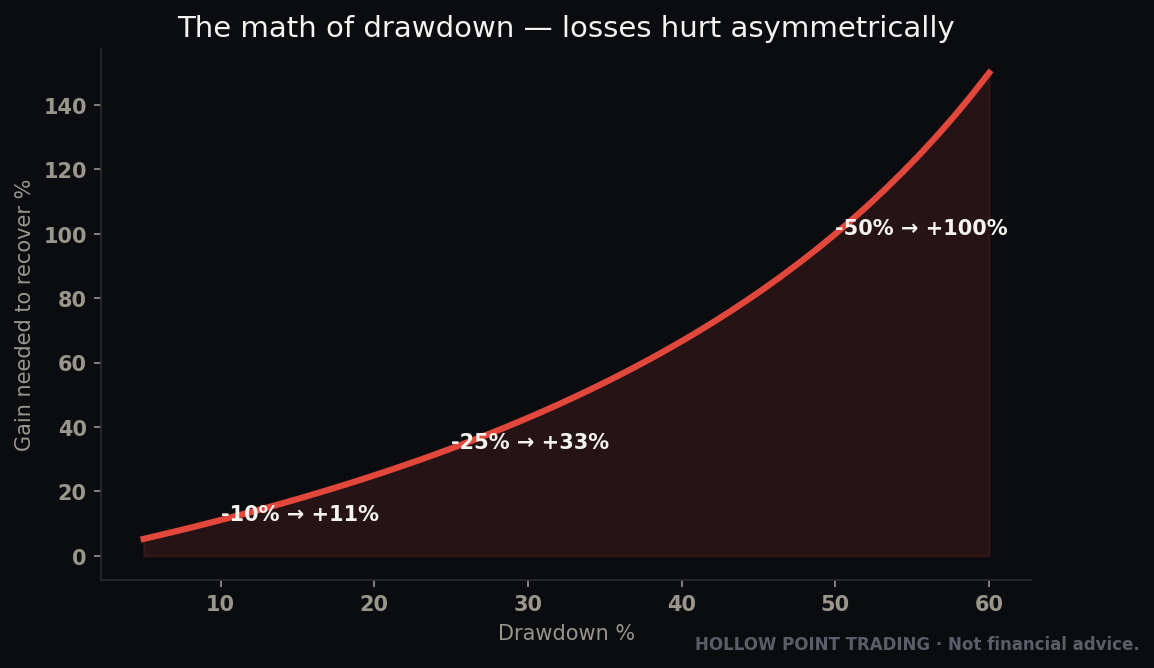
The default six-figure paper balance is poison. It teaches you to buy 1,000 shares and shrug off a $2,000 drawdown that would liquidate the real $3,000 account you're actually going to open. Set your sim balance to the exact number you will fund your live account with — if that's $2,000, your paperMoney account is $2,000. Now a position feels proportionally real. A trade that risks 1% risks $20, and you learn to build a process that survives on a small account instead of one that only works with imaginary infinite capital.
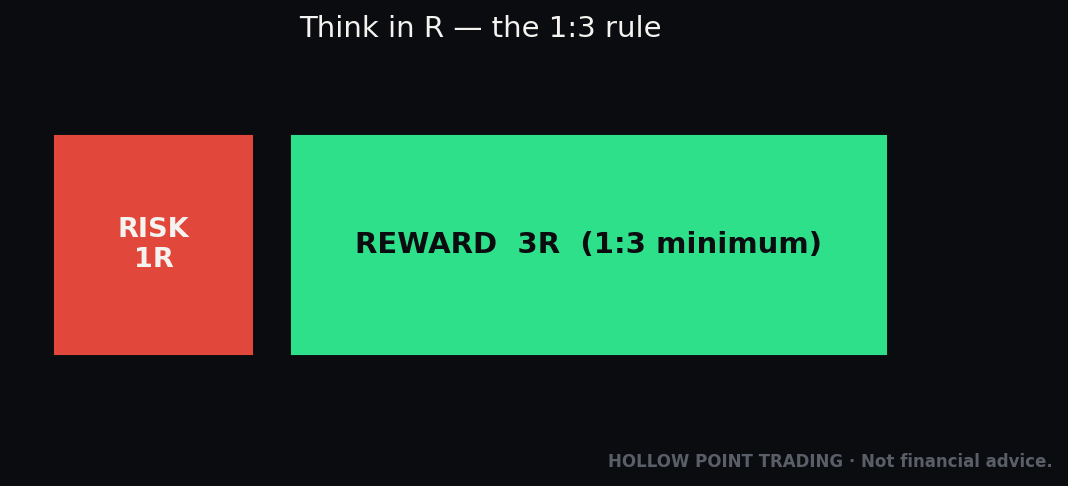
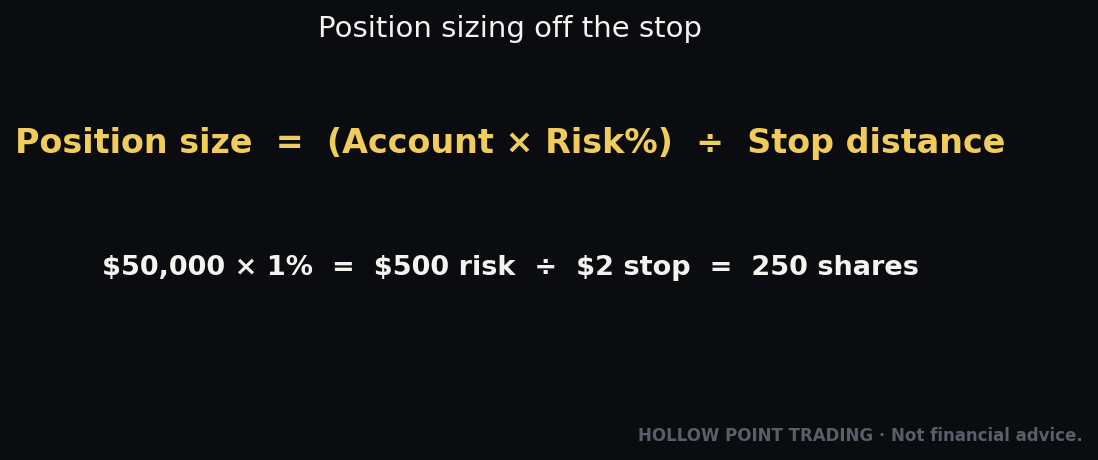
Worked example. You fund the sim with $2,000. You risk 1% per trade, so your max loss per trade is $20. You spot a stock setup: entry $50.00, stop $49.60 — a $0.40 risk per share. Position size = $20 risk ÷ $0.40 = 50 shares. That's a $2,500 notional position on a $2,000 account, which means you're using margin and you feel it. Now the target: 1:3 R/R means you need $1.20 of reward, so your target is $51.20. If you'd used the default $100,000 balance, that same trade would have been a rounding error and you'd have learned nothing about sizing, margin, or the discomfort of a real stop. This one change fixes half the transfer problem by itself. Size discipline is the skill most likely to blow up a real account, and it's the skill the default balance actively destroys.
Rule 2: Real rules. Trade the exact plan you'll trade live.
Every trade in the sim gets a written setup, a defined entry trigger, a stop placed before entry, and a target consistent with a minimum 1:3 reward-to-risk — you risk one unit to make at least three. If a trade doesn't clear that math, you don't take it in sim, because you won't take it live. Practicing "eh, I'll just see what happens" builds exactly that habit for when it's real money. *You are not practicing trading; you are practicing your trading system.* The whole point is to groove the specific process so deeply that live execution is automatic.
Write the plan before the entry, not after. The moment you're allowed to fill in the setup name and the reasoning retroactively, your brain will invent a justification for whatever you already did — that's not journaling, it's alibi construction. A trade with no pre-written plan is a rule violation even if it wins, and it gets logged as a violation.
Rule 3: Real friction. Model the spread, add slippage, count commissions.
If your platform lets you configure slippage (NinjaTrader), turn it on and set it pessimistically. If it doesn't (thinkorswim, Webull), impose it manually: when you journal the trade, record your fill as one tick worse than what the sim gave you on entry and exit. Assume commissions even if the sim doesn't charge them. This is the difference between a sim that flatters you and one that prepares you. A strategy that only prints in a frictionless sim is not a strategy — it's an artifact of a generous fill engine, and it will die the day real slippage shows up.
Worked example of the tax. You take 100 sim trades on NQ over a month. The frictionless sim reports +$3,000. Now apply honest friction: one tick of slippage per side ($5 × 2 = $10 per round trip) plus a realistic commission (~$4 round trip on a retail futures account) = ~$14 per trade × 100 = $1,400 of friction. Your real expected number is closer to +$1,600, not +$3,000. Nearly half your "edge" was the sim being nice to you. Better to learn that on paper than to fund a live account expecting $3,000 and quietly bleed the difference while wondering what changed.
Rule 4: Real records. Journal every single trade, no exceptions.
The journal is where sim reps become learning. Untracked practice is just entertainment. Every trade gets logged with: the setup name, the timeframe confluence behind it, entry, stop, target, size, the actual result, and — the most valuable field — why you entered and how you felt. The journal is the honest-feedback half of "correct reps, high volume, honest feedback." Without it you'll repeat the same mistake for six months and call it experience.
The columns that actually matter. A useful journal has, at minimum: date/time, symbol, setup name, the confluence stack (which timeframes and tools agreed), planned entry/stop/target, actual entry/exit, size, planned R and realized R, a yes/no "did I follow the plan," a one-line "why I took it," and a one-line "how I felt / what I did with my hands." Screenshot the chart at entry with your levels drawn. Weekly, you read the journal back and compute the numbers that matter: win rate, average winner vs. average loser (your actual realized R/R, not the planned one), your adherence rate (what percent of trades followed the plan exactly), and your worst behavioral leak (revenge entries? cutting winners early? moving stops?). The sim's P&L is almost irrelevant. These statistics are the real output of paper trading.
Rule 5: Real time. Trade the session you'll actually trade.
If you'll be a morning trader, sim the open. Don't take your reps at 2pm in a dead tape and expect them to transfer to the 8:30 chaos. For replay work this is where you engineer the reps deliberately — replay the exact conditions you struggle with — but for live-data sim, show up when your real market shows up. The tempo, the volatility, the decision speed of your actual session are part of the skill. A trader who only ever sims the sleepy lunch hour and then goes live at the cash open is like a driver who practiced in an empty parking lot and then merged onto a freeway at rush hour — technically the same car, completely different demand.
Follow all five and you've closed most of the gap. What remains is the part no simulator can fully reproduce — which is exactly what the next section is about, and exactly why we don't skip live entirely and paper-trade forever.
The Gap: Where Sim Lies, and How Much
Honesty is an HPT hard rule, so let's be precise about the gap between simulation and live trading instead of pretending it's zero or infinite. It has three components, in ascending order of importance.
1. Fills — the mechanical gap
This is real but small and manageable. In sim, your limit order fills the instant price touches it. Live, your order joins a queue and price often has to trade through your level, not just touch it, before you're filled — meaning some of your best sim entries simply won't fill in reality, and you'll get the ones that fill because the market kept running against you (adverse selection). Market orders live suffer slippage the sim didn't charge. Net effect: your live fills are meaningfully worse than your sim fills, especially on limit-entry strategies and in fast tape. This is why we model slippage manually and why a strategy needs margin for error beyond the frictionless case. A system that's barely profitable in sim is a losing system live.
The adverse-selection point deserves a hard stare because it's the sneakiest. In sim, imagine you place a limit buy at 24,500 on NQ and price ticks down to exactly 24,500 and bounces. Sim fills you; you catch the low; you're a genius. Live, price touching 24,500 doesn't mean you filled — there may be 800 contracts ahead of you in the queue and only 300 traded before it bounced, so you got nothing and missed the winner. The times you do fill live are disproportionately the times price kept going through 24,500 to 24,480 — i.e., the trades that immediately went against you. So live limit-entry strategies systematically miss some winners and catch extra losers relative to sim. The sim can't show you this. You can only partly account for it by being conservative about assuming fills on limit orders that price merely kissed.
2. Slippage and liquidity — the market-impact gap
In sim your orders are ghosts; they never move the book. Live, especially as your size grows or in thin instruments, your own order affects the price you get. For a small retail account in liquid names this is minor. It matters more in futures scalping, options with wide spreads, and small-caps. Sim will never teach you this — you only learn it live, which is one more reason the graduation to a small real account is a required step, not optional. The good news for most retail traders: at 1-5 contracts in NQ or a few hundred shares of a liquid large-cap, market impact is genuinely small. It becomes a real factor when you scale, which is a problem to solve when you get there, not before.
3. Emotion — the psychological gap, and it is everything
This is the real gap, the one that produces "I crush it on paper and fall apart live." When the money is fake, losing a trade costs you nothing, so you hold your stops, you let winners run, you take the valid setup without hesitation, you don't revenge-trade. The instant it's real, a different nervous system takes over. Real loss triggers genuine fear and pain; real profit triggers greed and the urge to grab it before it vanishes. Suddenly you're cutting winners at 1R because you "can't stand to give it back," moving stops to avoid the sting of being wrong, hesitating on the exact setup you took fifty times in sim, and revenge-sizing after a loss. None of your analysis changed. Your physiology did.
Here's the reframe that makes the gap useful instead of demoralizing: the emotional gap is the whole reason to build everything else in sim first. If your process is automatic — size, entry, stop, target, management all grooved to reflex — then going live introduces one new variable, your emotions, and you can put your full attention on managing that one thing. If your process is not automatic, going live hits you with six new hard things at once and you drown. Sim's job is to reduce the live challenge to a single, nameable problem. That's not a weakness of simulation. That's the point of it.
And the emotional gap is exactly why you graduate to a small live account rather than paper-trading forever OR jumping to full size. Small live money is real enough to switch on the nervous system — real fear, real greed — but small enough that the tuition for learning to manage it is cheap. More on that in the graduation section.
Paper Trading Across Market Regimes
A mistake that quietly ruins otherwise-disciplined sim work: practicing in only one kind of market and mistaking that for having practiced. Markets have regimes, and a setup that's a machine in one regime is a paper-shredder in another. Your sim sample is only meaningful if it spans them.
Trend regime
In a clean trend — price stair-stepping in a stacked EMA order, pulling back and continuing — most reasonable setups look brilliant. Breakouts follow through, pullback entries get rewarded, and your winners run past 3R if you let them. The danger here is that a strong trend flatters everything, including bad habits. You can enter late, size sloppily, and still win because the tide carries you. If your entire sim sample came from a trending stretch, you've learned almost nothing about whether your process has an edge or whether the market simply bailed you out. The discipline to build in a trend: practice letting winners run to full target and beyond, and practice not countertrading the strength out of boredom.
Chop / range regime
Sideways, mean-reverting tape is where most accounts die, and where sim practice is worth the most. Breakouts fail and reverse (the "false breakout" that stops you and then goes the other way), trends don't develop, and a 1:3 target that fills easily in a trend now sits untouched while price oscillates and eventually stops you out. This is where you learn the hard skills: trading smaller or standing aside, taking partials at range boundaries instead of demanding a runner, and recognizing when the market simply isn't offering your setup. Deliberately replay known ranging periods — they're easy to find — and force yourself to survive them. A trader who's only ever repped trends will get slaughtered the first live month the market goes sideways, which it does most of the time.
High-volatility regime
Fast, wide-range tape — a CPI print, an FOMC afternoon, an earnings gap. Here the spread widens, slippage explodes, stops get run and reversed, and the gap between sim fills and live fills is at its absolute worst. A market order in this regime can slip several ticks; a stop can fill points beyond its trigger. This is precisely the regime where a frictionless sim lies to you the most, so it's the regime where manual friction-modeling matters most — double or triple your assumed slippage when you journal high-vol trades. The skill to build: sizing down when volatility is up (same 1% risk means fewer contracts because the stop is wider), and respecting that your edge may simply not apply in the chaos. Many pros just don't trade the first few minutes after a major print. Sim is where you learn whether you're one of them.
The rule that ties it together: your graduation sample must contain trend, chop, and high-vol trades. A 60-trade sample that's all from one calm trending week is not a sample — it's a single data point wearing a costume.
The Multi-Timeframe Dimension
Paper trading isn't done on "a chart" — it's done across a stack of them, and the timeframe you practice on changes what skill you're building.
Higher timeframes teach patience and structure
Practicing on the daily and 4-hour teaches you to read the dominant structure and the bias — where the daily 55-EMA sits, whether the weekly is making higher highs, where the big levels are. Trades here are few and slow. In sim, higher-timeframe practice is mostly about not trading — learning to wait for the setup to actually form rather than forcing one. Bar Replay is ideal for this because you can compress weeks of "nothing" into minutes and only stop when structure actually presents.
Lower timeframes teach execution and tempo
The 1-minute and 5-minute are where the entry actually happens, and they're a different skill entirely: fast recognition, quick sizing, and the emotional control to click without freezing. This is where live-data sim during your real session earns its keep, because the tempo can't be faked. You can't build 1-minute execution nerve in slow replay; you build it under real-time pressure.
The alignment habit
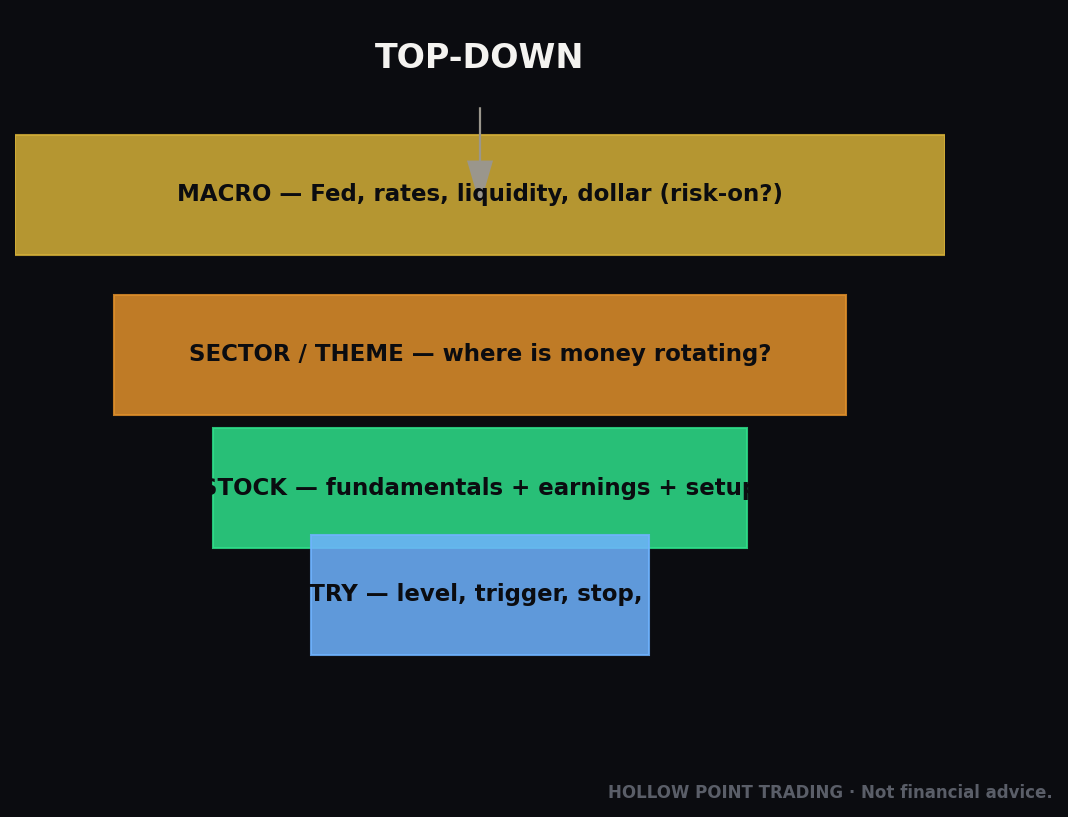
The real skill is using them together: the higher timeframe sets the bias and the level, the lower timeframe times the entry. In sim you practice the full stack — confirm the daily bias is long, confirm the sector agrees, wait for price to reach your higher-timeframe level, then drop to the 1- or 5-minute for the trigger. Grooving this top-down-then-zoom-in sequence in sim is what stops you, live, from taking a lonely 1-minute signal that fights the daily trend. Write the timeframe read for every sim trade and you'll build the habit that most blown accounts never had: never let the small timeframe overrule the big one.
How Paper Trading Stacks With Your Other Tools (Confluence)
Sim isn't a standalone skill — it's the rehearsal room where you learn to combine the rest of your toolkit into a single decision. Three pairings matter most.
With EMA 12/22/55 structure
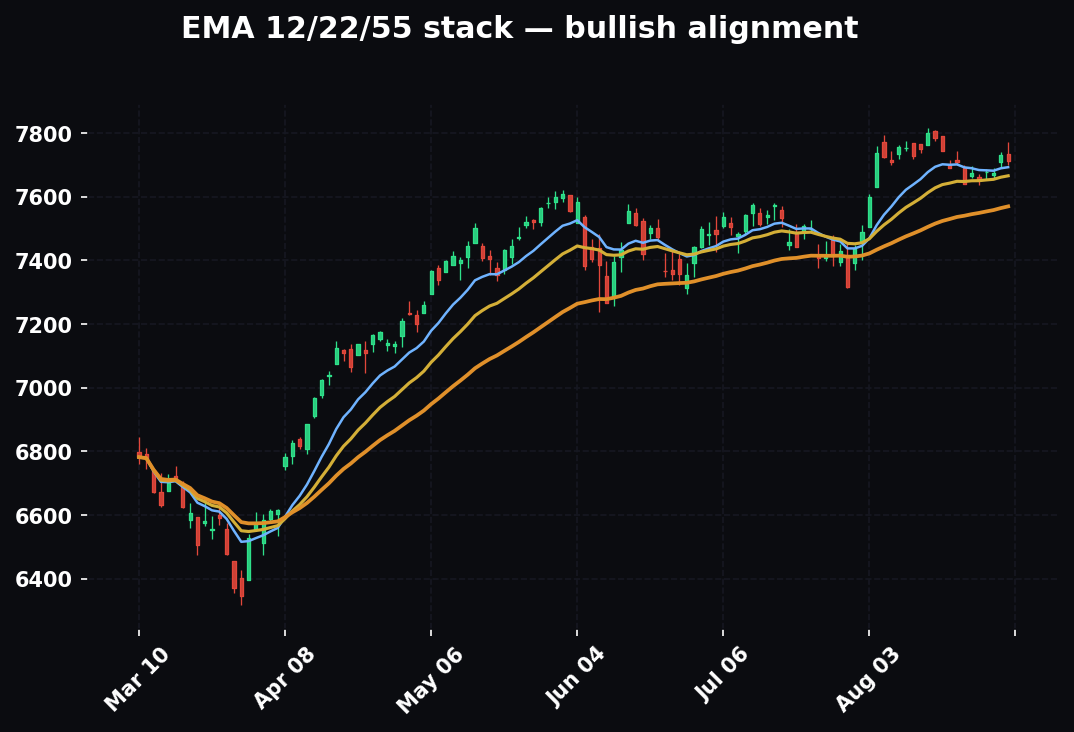
This is the backbone read, and sim is where you make it reflexive. Set the three EMAs, and in replay hunt every instance of your core structural events — the 55-EMA reclaim, the "505 rejection" (price rejecting the 55-EMA), the 12/22 cross confirming trend, the daily 55 defining bias. You will see each of these dozens of times in an afternoon. That volume of correct reps is what turns "I think that's a reclaim" into instant, confident recognition. The confluence habit: don't take the trigger unless the EMA structure agrees with it. A 1-minute long into a stacked-bearish daily EMA is a low-quality signal, and sim is where you learn to feel that in your gut and pass.
With volume and VWAP
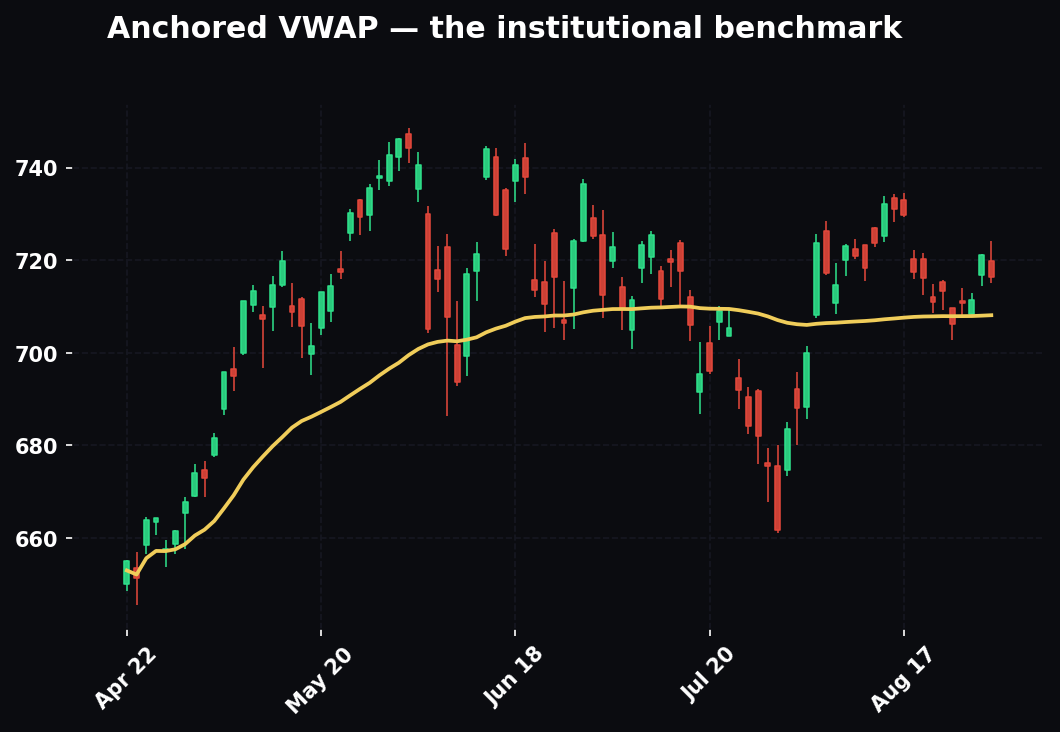
Layer VWAP and a volume read onto the same practice. A breakout on expanding volume that holds above VWAP is a different animal from a breakout on dying volume that immediately loses VWAP — same price pattern, opposite quality. In sim you can take both, log both, and watch your journal reveal that the low-volume version is a coin flip while the volume-confirmed version carries your edge. That's a lesson worth thousands of dollars that you paid nothing for.
With timeframe-weighted confluence scoring
The HPT way is to score a setup by how many weighted timeframes agree, not to take it on a single signal. Practice the actual scoring in sim: for every trade, write the confluence stack and only pull the trigger when the weighted read clears your threshold. This grooves the discipline to pass on thin, single-timeframe signals that feel urgent but score low. Over a 100-trade sample your journal will show, unambiguously, that your high-confluence trades carry your P&L and your low-confluence "I couldn't help myself" trades bleed it. Sim turns that from an opinion into a measured fact — which is the only form of the lesson that actually changes behavior.
The through-line: sim is where these tools stop being separate indicators you glance at and become a single, fast, integrated read. That integration is itself a skill, and like every other skill it's built by correct reps, high volume, honest feedback.
How the HPT Top-Down Process Lives in the Sim
Simulation isn't a separate activity from the HPT method — it's the rehearsal room for every layer of it. The Hollow Point process runs macro → sector → stock, filters through EMA 12/22/55 trend structure, demands timeframe-weighted confluence, and holds you to 1:3 R/R and discipline over prediction. Every one of those is a skill, and every one of them can be repped in sim.
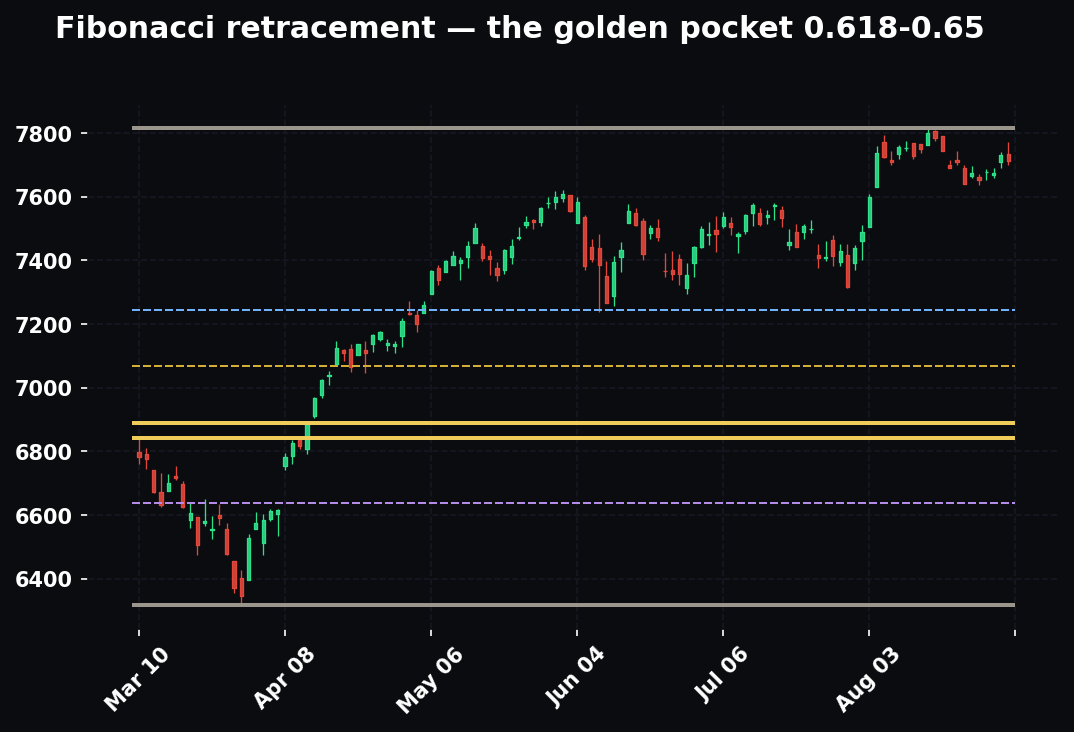
Macro and sector, in replay. Use TradingView Bar Replay to walk the index and the sector ETF forward alongside your ticker. Practice the top-down read as a sequence: is the broad tape (ES/NQ) trending or ranging, is the sector leading or lagging its index, and only then — does the individual name line up? Replay lets you rehearse this multi-chart read on historical days where you already know it mattered, building the habit of never taking a stock setup that fights its sector and macro.
1:3 R/R and discipline over prediction. These are habits, and habits are built by repetition under the rule. Every sim trade with a stop-first, 3R-minimum target, taken by rule and not by hunch, is a rep of the exact discipline that separates HPT traders from gamblers. You are not practicing to predict the market. You are practicing to execute a rules-based process regardless of what the market does next — and sim is where that becomes who you are before a dollar is at risk.
The through-line: sim is where the HPT process becomes reflex, so that live, your attention is free for the one thing sim can't teach — yourself.
How the Pros Use Sim Differently From Beginners
Same tool, opposite relationship. The gap between how a professional and a beginner use a simulator is a near-perfect x-ray of what separates the two traders.
Beginners use sim to feel good; pros use it to find flaws. A beginner's sim session ends when they're up money and feeling confident. A pro's sim session is hunting for the trade that breaks their process — deliberately trading the ranges, the fakeouts, the high-vol prints where their edge might not hold. The beginner wants confirmation; the pro wants disconfirmation, because disconfirmation is where the learning is.
Beginners chase P&L; pros chase adherence. Ask a beginner how sim is going and they'll tell you their profit. Ask a pro and they'll tell you their plan-adherence rate and their realized-vs-planned R. The pro knows the P&L over any small sample is mostly noise, and that the only thing they control — and therefore the only thing worth grading — is whether they executed the process correctly.
Beginners restart; pros keep the ledger. A beginner who has a bad sim week resets the account to erase the drawdown. A pro would sooner delete their own hand — the drawdown is the data. The permanent, unedited record is the entire point; a resettable scorecard measures nothing.
Beginners quit sim the day they go live; pros run both forever. To a beginner, sim is a phase to escape. To a pro, sim is a permanent instrument in the kit — the place to test a new setup before risking it live, to rebuild after a live drawdown, to grind recognition in slow seasons. The best traders alive still paper-test new ideas. Graduating to live doesn't retire the sim; it just adds a second environment.
Beginners model no friction; pros model too much. A beginner trusts the fill the sim gave them. A pro assumes the worse fill on every entry and exit, counts commissions the sim didn't charge, and only believes an edge that survives pessimistic friction. They'd rather underestimate their edge in practice and be pleasantly surprised live than the reverse.
Beginners practice when it's convenient; pros practice their exact conditions. A beginner sims whenever they have time. A pro sims their actual session, their actual instrument, their actual setups — because they know transfer depends on the practice matching the target, and a rep in the wrong conditions is a rep of the wrong skill.
The one-sentence version: beginners use the simulator to confirm they're good; professionals use it to find out precisely how they're not, and fix it where mistakes are free.
The Common Mistakes
The ways paper trading fails are predictable. Here are the ones that waste the most time, each with its fix.
1. Trading fantasy size. The single most common killer. Six-figure default balance, 1,000-share positions, drawdowns that would liquidate a real account shrugged off as noise. Everything you learn is untransferable because the proportions are wrong. Fix: set the sim balance to your real future funding, exactly, and size by 1% risk.
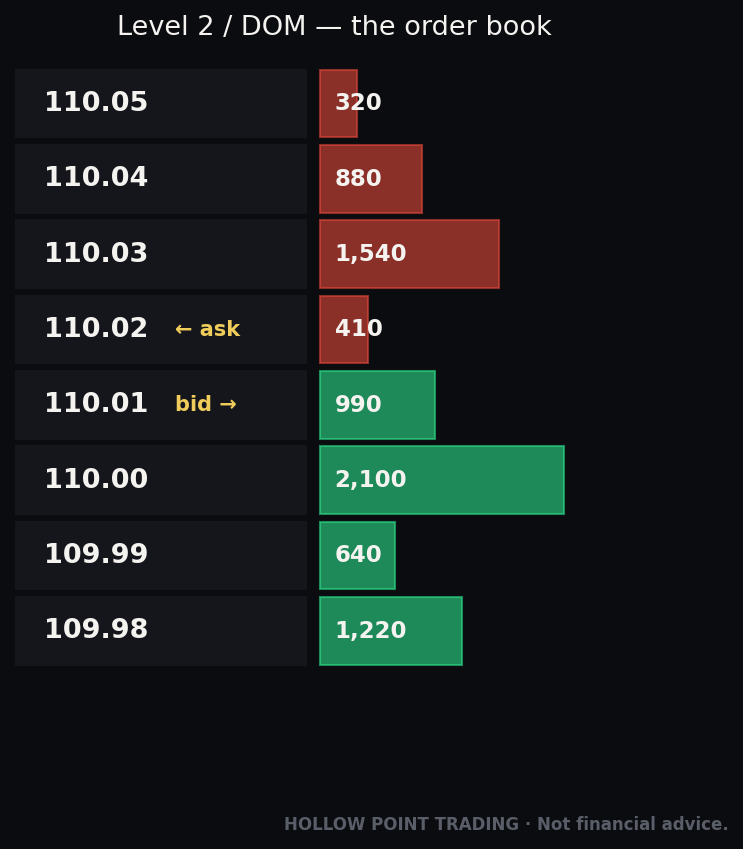
2. No rules, just clicking. Buying because it "looks like it's going up," no written setup, no pre-placed stop, no target. This practices gambling, and it practices it well. Fix: every trade gets the full plan — setup, entry, stop-first, 1:3 target — written before entry, or it doesn't happen.
3. Not journaling. Reps without records are entertainment. You cannot improve what you don't measure, and your memory of your own trading is a flattering liar. Fix: log every trade including why and how you felt, and read it back weekly.
4. Cherry-picking the scorecard. Remembering the winners, forgetting the losers, restarting the account after a bad week to erase the drawdown. This manufactures false confidence that live trading will violently correct. Fix: the account is permanent; the journal is complete; the statistics include everything.
5. Frictionless fantasy. Trusting sim fills that ignore slippage, spread, and commission, then building a "profitable" strategy that only works in the frictionless dream. Fix: model slippage manually, count commissions, assume you get the worse fill.
6. Single-regime practice. Racking up 80 trades in one quiet trending week and calling it a validated edge. The market's real behavior — chop, fakeouts, high-vol prints — never got tested. Fix: your sample must span trend, range, and high-volatility conditions before it means anything.
7. Overtrading because it's free. Fake money removes the natural brake, so beginners take 40 trades a day in sim they'd never take live, grooving an itchy-trigger habit. Fix: hold sim to the same trade-selectivity you'll demand live — if a real account would take 3 setups today, so does the sim.
8. Paper-trading forever. The opposite failure — hiding in sim because it's safe, never graduating, treating the absence of real stakes as a permanent home. You will never build the emotional skill this way. Sim is a bridge, not a destination. Fix: define graduation criteria (next section) and cross the bridge when you hit them.
9. Going live with zero sim. The other opposite — skipping practice entirely and learning execution mechanics with real money in the moment your heart rate is spiking. Maximum tuition, minimum learning. Fix: groove the process in sim first so live introduces only the emotional variable.
10. Peeking in replay. Letting your eye drift to the future bars, or restarting when the trade goes against you. This turns the single best pattern-training tool into self-deception. Fix: cover the right side of the screen, take the trade you'd take live, and live with the outcome.
11. Modeling closes, ignoring the intrabar path. On higher timeframes, assuming you got filled at a bar's extreme when live you'd have been stopped by the path price took inside it. Fix: execute on a lower timeframe or assume the worse intrabar path when journaling.
12. Confusing a good sim P&L with readiness. Being up money in sim and concluding you're ready, when your adherence was 60% and your realized R was 1:1. Fix: grade adherence and realized R, not P&L — those are the metrics that predict live survival.
When to Graduate to a Small Live Account
This is the decision people get wrong in both directions — jumping to real money at full size after two good sim weeks, or hiding in the sim for two years. Here are the concrete, numeric criteria. You graduate when you can answer yes to all of these:
- Sample size. At least 50–100 completed sim trades, journaled in full. Not two great days — a real sample across different market conditions (trend, range, chop). Anything less and your "edge" is noise.
- Profitability across the sample. Net positive over that sample after your manually-modeled slippage and commissions — not one lucky week, and not a curve that only works when you delete the losers.
- Adherence rate above 90%. This matters more than P&L. What percent of your trades followed your written plan exactly — right setup, stop-first, size by rule, exit by rule? If you're profitable but only followed your plan 60% of the time, you got lucky and you are not ready. Discipline over prediction, measured.
- Realistic R/R, delivered. Your actual realized reward-to-risk (average winner ÷ average loser) is consistent with your system's design. If you planned 1:3 but your realized number is 1:1 because you keep cutting winners early, the emotional leak is already visible in sim — fix it there, cheaply, before it costs real money.
- You can name your worst leak — and it's shrinking. From the journal: what's your most expensive repeated behavioral mistake, and is the weekly trend showing it decrease? Self-awareness plus improvement, not perfection.
Worked example of a graduation-ready sample. 72 trades over six weeks, spanning two trending stretches, one grinding range, and a CPI-day high-vol session. Net +$640 on a $2,000 modeled account after subtracting one tick of slippage per side and $4 round-trip commission on every trade. Win rate 44% — below half, and still profitable, because the average winner is $95 and the average loser is $38, a realized R of roughly 1:2.5 against a planned 1:3 (close enough, and the small shortfall traces to a handful of early exits you've already flagged). Adherence 93%: five plan violations out of 72, all revenge entries clustered in one bad afternoon you can point to in the journal, and the weekly count is 3, 1, 1, 0, 0 — the leak is visibly shrinking. That trader is ready. Notice the win rate is under 50% and it doesn't matter at all — the R/R and the discipline are what make the edge, exactly as designed.
Then graduate small. The first live account is funded with an amount you can genuinely afford to lose entirely without changing your life, because you will pay some tuition and the point isn't the money, it's turning on the emotion under controlled stakes. Same process, same 1% risk, same journal — the only new variable is that it's real, so your entire focus goes to executing your already-automatic process while your nervous system throws its tantrum. Small enough that the fear is educational rather than destructive; real enough that the fear actually shows up. That is the whole design of the bridge from sim to live: reduce the live problem to one thing, then face that one thing at a size where losing the lesson is cheap.
And here's the part nobody tells beginners: you don't retire the sim after you go live. Working traders run both forever. Test a new setup in sim before risking it live. Rebuild confidence in the sim after a live drawdown. Grind replay to sharpen recognition during slow seasons. The simulator is a permanent tool in the kit, not a phase you outgrow.
FAQ
How long should I paper trade before going live? There's no time answer — it's a criteria answer. Not "three months," but "until I hit all five graduation criteria across a sample that spans market regimes." For some people that's six weeks of focused daily reps; for others it's longer. Time is the wrong unit; correct reps and measured discipline are the right ones.
Isn't sim pointless because there's no real emotion? No — that's the exact opposite of the lesson. Sim isn't for building emotional control; it's for making everything else automatic so that when you go live, emotion is the only new thing you have to manage. Sim reduces the live challenge from six problems to one. That's its entire value, and the "no emotion" objection is actually the argument for it.
Should I use the biggest paper balance so I can trade more? Never. The large default balance is the single most destructive setting in paper trading. Set the sim balance to the exact amount you'll fund live, so position sizing, margin, and drawdown all feel proportionally real. Fantasy size teaches fantasy habits.
Can I get emotional over fake money? I actually feel it. A little, and that's a good sign — it means you're taking the reps seriously. But it's a fraction of the real thing, and you should assume the live emotional load will be far larger. Use the mild sim-emotion to practice your process; don't mistake it for having conquered the real fear, which only shows up when the money is yours.
Which platform should a total beginner start on? Webull to learn the buttons with real rules attached, and TradingView Bar Replay in parallel to build recognition fast. Move to thinkorswim paperMoney once you want the full equity/options workflow, or NinjaTrader if you're headed for futures. Don't platform-hop for novelty — pick by your market and stage and stay put.
How do I model slippage if my platform won't do it for me? Manually, in the journal. Record every fill one tick worse than the sim gave you, on both entry and exit, and subtract a realistic commission even if the sim charged none. It feels pedantic; it's the difference between a number you can trust and a number that will betray you live.
My sim results are great but I keep breaking my own rules — am I ready? No. Adherence above 90% is a hard gate, and it outranks P&L. Profitable-but-undisciplined means you got lucky, and luck reverses violently with real money. Fix the adherence in sim, where breaking rules is free, before you graduate.
Do I stop using the sim once I'm live? No. Run both forever. Sim is where you test new setups, rebuild after a drawdown, and sharpen recognition in slow seasons. Every serious trader keeps a demo running alongside the live account. It's a permanent tool, not a training-wheels phase.
Is a high win rate the goal in sim? No. Realized R/R and discipline are the goal. A 44% win rate at 1:2.5 realized R is a strong, profitable, graduation-ready system; a 70% win rate at 1:0.5 realized R is a slow death. Chase the R and the adherence; let the win rate be whatever it is.
The Cheat-Sheet
Pin this. It's the whole guide in one screen.
Why sim matters
- Trading is 80% execution under uncertainty — a motor-and-decision skill built by correct reps, high volume, honest feedback.
- Sim gives you thousands of process reps without paying market tuition on every mistake.
- Goal is skill transfer, not confidence. Engineer the practice so it carries to live.
The four platforms
- Webull paper — learn the buttons. Beginner on-ramp.
- thinkorswim paperMoney — build the equity/options workflow. Same platform as live.
- TradingView Bar Replay — build the eye. Time-compressed pattern reps. Don't peek.
- NinjaTrader sim — serious futures reps. Configurable slippage = most honest fills.
The realism protocol (all five, non-negotiable)
- Real size — set sim balance to your actual future funding; risk 1%.
- Real rules — written setup, stop-first, 1:3 R/R minimum, plan written before entry.
- Real friction — model slippage pessimistically, count commissions, take the worse fill.
- Real records — journal every trade including why + how you felt; review weekly.
- Real time — sim the session you'll actually trade.
The gap (know where sim lies)
- Fills: sim fills on touch; live makes you queue and trade through — your live fills are worse, and adverse selection means you miss winners and catch extra losers on limit entries.
- Slippage/liquidity: your sim orders are ghosts; live, your size moves the book. Only learnable live.
- Emotion: the real gap. Fake money = no fear/greed. This is why you groove everything else in sim — so live is one new variable, not six.
Regimes — your sample must span all three
- Trend — flatters everything; practice letting winners run, don't countertrade.
- Chop/range — where accounts die; trade smaller or stand aside, respect false breakouts.
- High-vol — worst sim-to-live fill gap; size down, model double slippage, maybe don't trade the print.
What to actually work on
- Macro→sector→stock top-down read (rep it in multi-chart replay).
- EMA 12/22/55 structure — reclaims, 505 rejections, crosses, daily-55 bias.
- Multi-timeframe alignment — higher TF sets bias/level, lower TF times entry.
- Timeframe-weighted confluence scoring; pass on thin single-TF signals.
- 1:3 R/R and stop-first discipline until they're reflex.
Pros vs beginners
- Pros hunt flaws; beginners hunt confirmation.
- Pros grade adherence + realized R; beginners chase P&L.
- Pros keep a permanent ledger; beginners restart to erase drawdowns.
- Pros run sim forever; beginners quit it the day they go live.
Graduate to small live when (all five)
- 50–100 journaled trades across varied conditions.
- Net positive after modeled slippage + commissions.
- Plan-adherence rate above 90%.
- Realized R/R matches system design.
- You can name your worst leak and it's shrinking.
Then go live small — real enough to trigger emotion, cheap enough that the lesson doesn't hurt. Keep the sim forever.
The market does not care how good your analysis is. It pays you for execution — for doing the boring, rules-based right thing a thousand times while your nervous system begs you to do something else. Simulation is the only place you can build that machine for free. Build it correctly, at real size, with real rules and an honest journal, across every regime, and the day you go live, the market will only have one way left to test you: it'll come at your emotions. And you'll already know your process cold, so that's a fight you can win.
Bound by rules, feared by trade.